Most home cooks need a 10- or 12-inch skillet, a 2- to 3-quart saucepan, a 5- to 6-quart stockpot or Dutch oven, and a few useful lids and cooking tools. Choose materials that match your stove and the meals you make.
Setting up a kitchen in the United States can feel like a big job, especially when you move into your first apartment, buy a home, or replace old kitchen supplies. Walk into a store such as Walmart, Target, or a kitchen supply shop, and you may see dozens of cookware sets with pieces you have never used. The good news is that you do not need a cabinet full of pots and pans to cook good meals.
The right cookware depends on what you eat, how many people you feed, and the type of stove in your home. A small household may need only three or four main pieces, while a family that cooks large meals may benefit from a bigger pot and an extra skillet. I recommend starting with versatile cookware and adding special pieces only when a real cooking need appears.
This guide explains which pots and pans belong in a basic kitchen, what each one does, and how to choose between stainless steel, nonstick, cast iron, and other materials. It also covers cookware sizes, stove compatibility, care, and common buying mistakes. The goal is to help you build a useful kitchen without spending money on pieces that will sit unused.
You need a few versatile pots and pans that cover common cooking methods. These include frying, boiling, simmering, sautéing, and slow cooking. A good starter collection should let you prepare breakfast, lunch, dinner, and simple family meals without needing a different pan for every recipe.
For most homes, three main pieces provide a practical starting point. Add a second skillet or a Dutch oven if your cooking habits call for one. This approach keeps your first shopping list short and gives you room to choose better-quality pieces.
The American Heart Association recommends selecting cookware based on practical use rather than buying a matching set. Its kitchen equipment guide also includes several pot sizes and skillets for different tasks. You can use that wider list as a starting point and adjust it to your household.
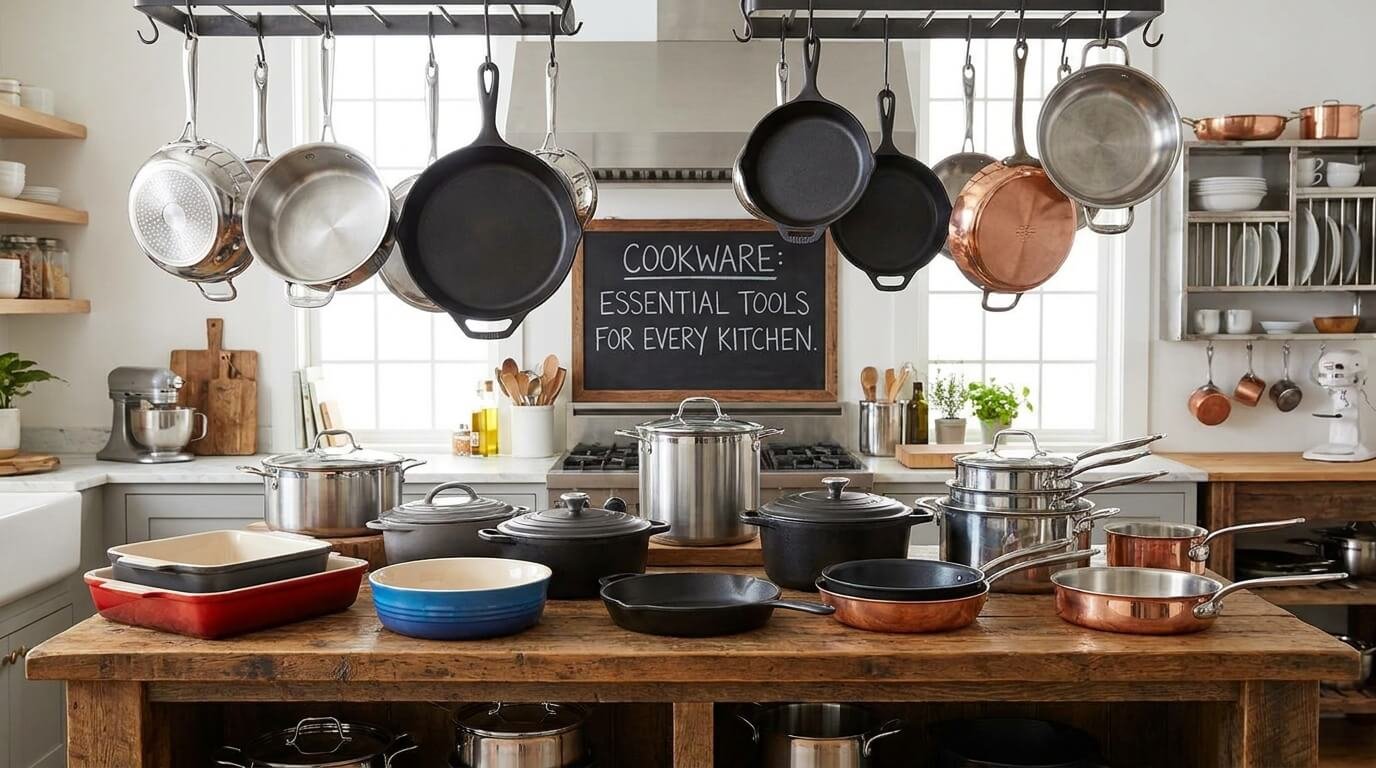
Source: cleverkitchengear.com
One 10- or 12-inch skillet
Use it for eggs, vegetables, chicken, burgers, fish, and many one-pan meals. A 12-inch model gives you more room for family portions.
One 2- to 3-quart saucepan
Use it for oatmeal, rice, sauces, vegetables, soup, and reheating leftovers. A lid helps retain heat and moisture.
One 5- to 6-quart stockpot or Dutch oven
Use it for pasta, beans, soups, stews, potatoes, and larger meals. Choose between a lighter stockpot and a heavier Dutch oven based on your cooking style.
One small nonstick skillet
This is useful for eggs, pancakes, and other delicate foods. You can add it when you regularly cook these meals.
One rimmed baking sheet
Use it for roasted vegetables, baked chicken, sheet-pan dinners, and many oven recipes.
The Minimum Cookware Set for One or Two People
If you live alone or cook for two, start with a 10-inch skillet, a 2-quart saucepan, and a 5-quart pot. These pieces cover most small meals without taking up too much cabinet space. A baking sheet is another useful purchase if you have an oven.
You can also choose a 12-inch skillet if you often cook extra portions for the next day. One larger pan can handle more food, but it may take up more storage space and feel heavy when full.
For small meals
Choose a 10-inch skillet and a 2-quart saucepan.
For meal preparation
Choose a larger skillet and a 5- to 6-quart pot.
Cookware for a Family Kitchen
Families often need more cooking space because several ingredients may be cooking at once. A 12-inch skillet, a 3- to 4-quart saucepan, and a 6- to 8-quart stockpot make a useful combination.
An extra skillet can also save time when you cook meat and vegetables at the same time. You do not need two large pots unless you regularly prepare large batches of soup, pasta, or other meals.
Larger cooking capacity
Choose pots that can hold family portions without overflowing.
More than one cooking surface
An extra skillet helps when several dishes need attention at the same time.
Essential Pots and Pans and What They Are Used For
Each type of cookware has a different shape and purpose. A skillet has a wide base for frying, while a saucepan has taller sides for liquids and smaller portions. A stockpot holds larger amounts of food, and a Dutch oven supports slow cooking on the stove or in the oven when its construction allows it.
Understanding these differences helps you avoid buying several pans that perform nearly the same job. Start with the pieces that match your regular meals, then add specialty cookware as your skills and interests grow.
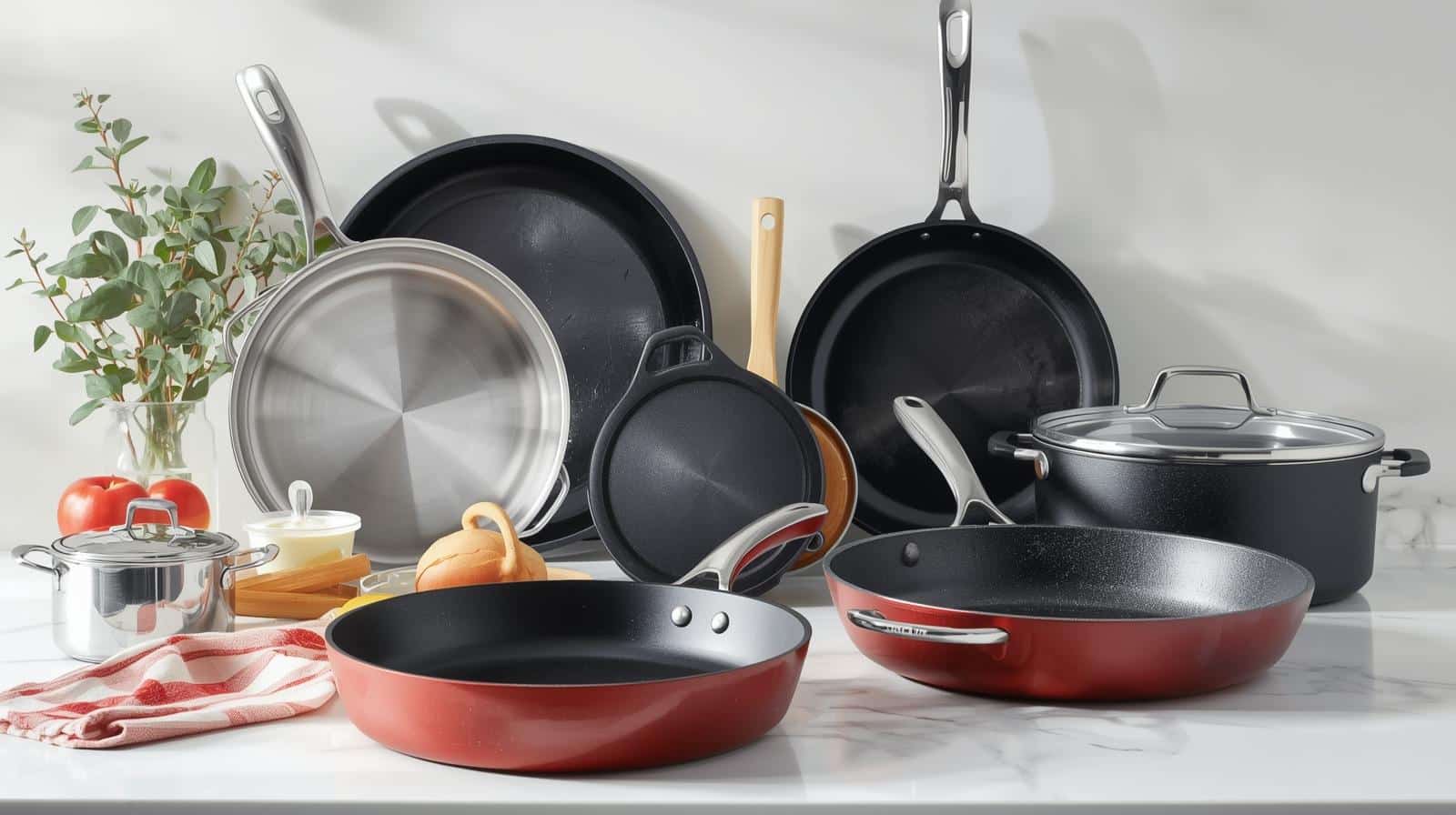
Source: modernkitchenguru.com
Frying pan or skillet
A wide, shallow pan with sloping sides. It is useful for frying eggs, searing meat, cooking vegetables, and making quick meals.
Saucepan
A smaller pot with tall sides and a long handle. It works well for rice, sauces, oatmeal, grains, and reheating food.
Stockpot
A tall pot with two side handles. It is useful for pasta, broth, soup, corn, and large batches of beans.
Dutch oven
A heavy pot, often made from cast iron, with a tight-fitting lid. It is useful for braising, baking bread, cooking beans, and making stews.
Sauté pan
A wide pan with relatively straight sides. It offers extra room for vegetables, meat, and dishes that start with browning and finish in liquid.
Wok
A deep pan with sloping sides. It is useful for stir-frying, tossing vegetables, and cooking meals that need frequent movement.
Do You Need Both a Stockpot and a Dutch Oven?
No. Many new home cooks can start with one of these pieces. A stockpot is usually lighter and better suited to boiling large amounts of water or preparing big batches of soup. A Dutch oven is heavier and holds heat well, making it useful for slow cooking and braising.
If you often make pasta, stock, and large soups, choose a stockpot first. If you prefer chili, pot roast, baked beans, and slow-cooked meals, a Dutch oven may be more useful. You can buy the other piece later if your cooking needs change.
Choose a stockpot
If you often boil pasta, cook corn, make broth, or prepare large batches of food.
Choose a Dutch oven
If you regularly braise meat, cook stews, bake bread, or prepare one-pot meals.
Are Specialty Pans Necessary?
Specialty pans are optional. A grill pan, crepe pan, griddle, paella pan, and pasta insert can make certain tasks easier, but most home cooks can prepare similar meals with basic cookware.
For example, you can make pancakes in a regular skillet. You can also stir-fry vegetables in a large flat-bottom skillet if you do not own a wok. Buy a specialty pan when you make that type of food often enough to justify the extra storage.
Griddle
Useful for frequent pancake, French toast, and breakfast cooking.
Wok
Useful for regular stir-frying, especially when its shape matches your cooktop.
Grill pan
Useful for indoor grilling marks, although it does not replace an outdoor grill.
Which Cookware Material Should You Choose?
The material affects how quickly a pan heats, how well it holds heat, how much care it needs, and which foods work best in it. There is no single material that is ideal for every meal. A mixed collection often gives you more flexibility than buying every pan in the same material.
Stainless steel, nonstick, cast iron, carbon steel, and aluminum are common choices in American kitchens. Each has useful features and limitations. The best choice depends on your cooking habits, budget, maintenance preferences, and cooktop.
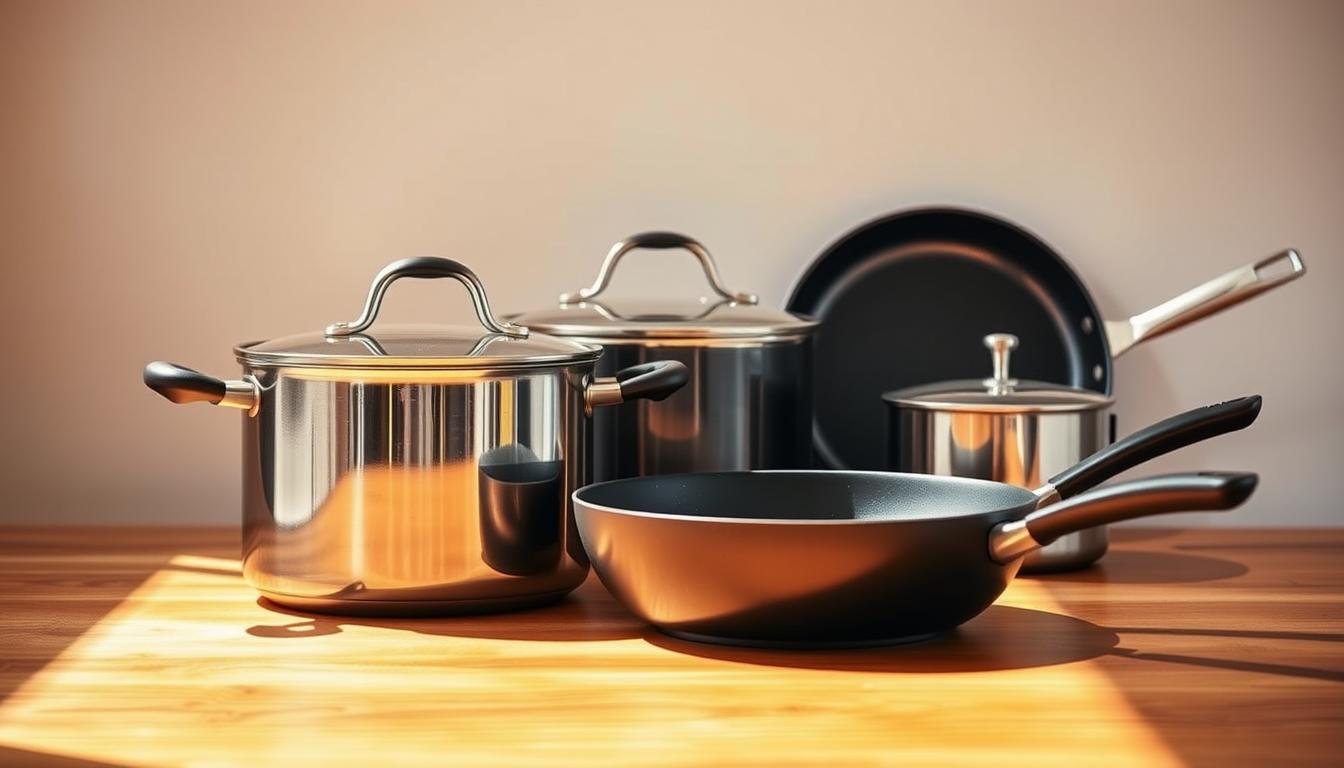
Source: pomodorofoodsset.com
Stainless steel
A durable and versatile option for searing, sautéing, sauces, and everyday cooking. It is usually dishwasher-friendly only when the manufacturer’s instructions allow it.
Nonstick
A convenient choice for eggs, pancakes, and delicate foods. It needs gentle utensils and careful heat control to protect its coating.
Cast iron
A heavy material that retains heat well. It is useful for searing, frying, baking, and slow cooking.
Carbon steel
A relatively light material that can develop a seasoned cooking surface. It works well for high-heat cooking but needs maintenance.
Aluminum
A good heat conductor that is often used in affordable cookware and as a core inside other pans. Hard-anodized aluminum has a treated surface.
Enameled cast iron
A cast-iron body with a glass-like enamel coating. It offers heat retention without the same seasoning routine as bare cast iron.
Is Stainless Steel Cookware a Good Starting Point?
Stainless steel is one of the most useful materials for a starter kitchen. It handles many cooking tasks, does not need seasoning, and can last for years with proper care. It is especially useful for browning meat, cooking vegetables, and making pan sauces.
Some stainless steel pans have an aluminum or copper layer inside their base or walls. This construction helps spread heat because stainless steel alone is not an especially efficient heat conductor. Fully clad cookware can distribute heat across more of the cooking surface.
Food can stick to stainless steel if the pan is used incorrectly. Preheating, choosing enough cooking fat, and allowing food to release naturally can help. If you prefer simple cooking with very little sticking, keep a nonstick skillet as a companion.
Best for
Searing, sautéing, sauces, browning, and general daily cooking.
Main advantage
Versatility and durability.
Main limitation
It takes some practice to cook delicate foods without sticking.
When Should You Buy Nonstick Cookware?
Nonstick cookware is useful when you prepare eggs, omelets, pancakes, and delicate fish. Its coated surface helps food release with less effort and makes cleanup easier. It can also reduce the amount of cooking fat needed for some recipes.
Most traditional nonstick pans have a PTFE-based coating. Follow the manufacturer’s heat limits, avoid heating an empty pan, and do not use a damaged pan. Choose wood, silicone, or other approved utensils instead of sharp metal tools.
Nonstick cookware is not usually the best choice for very high-heat searing. Its coating can wear over time, so treat it as a convenience item that may need replacement sooner than a sturdy stainless steel or cast-iron pan.
Best for
Eggs, pancakes, omelets, and delicate foods.
Main advantage
Easy food release and simple cleanup.
Main limitation
The coating requires proper care and has a limited service life.
Is Cast Iron Worth Buying?
Cast iron is worth considering if you enjoy seared meat, fried food, cornbread, or oven cooking. It holds heat well and can move from the stovetop to the oven when the handle and product design allow it.
Bare cast iron needs seasoning, which means maintaining a thin layer of baked-on oil. You should dry it well after washing and avoid leaving it wet for long periods. Acidic foods can also affect the seasoning, especially during long cooking sessions.
Enameled cast iron is another option. Its coating reduces the need for seasoning and makes it useful for tomato-based sauces and slow-cooked meals. However, it is often heavy and needs protection from hard impacts.
Best for
Searing, frying, baking, and heat-retaining cooking.
Main advantage
Strong heat retention and long service life with proper care.
Main limitation
Weight and maintenance, especially with bare cast iron.
How to Choose Cookware for Your Stove
Your cooktop is one of the first things to check before buying cookware. A pan that does not work with your stove can waste money and may cook poorly. Read the product label and manufacturer instructions before making a purchase.
Gas, electric, glass-ceramic, and induction cooktops transfer heat in different ways. Some cookware works on several types of stoves, while other pieces are designed for a specific heat source.
Source: images.squarespace-cdn.com
Gas stove
Works with many types of cookware, including stainless steel, cast iron, carbon steel, and suitable nonstick pans. Use a stable base and avoid flames extending far up the sides.
Electric coil stove
Works with most cookware that has a flat and stable bottom. A pan that makes good contact with the coil can heat more evenly.
Glass-top electric stove
Needs cookware with a smooth, flat bottom that will not scratch the surface. Avoid dragging heavy pans across the glass.
Induction stove
Needs cookware with a magnetic base. Stainless steel and cast iron can work if the exact pan is induction-compatible.
How Can You Tell If a Pan Works on Induction?
Induction cooktops use a magnetic field to heat compatible cookware. A regular aluminum or copper pan may not work unless it has a suitable magnetic base. The word stainless steel alone does not guarantee induction compatibility.
A simple home check is to place a magnet against the bottom of the pan. If the magnet holds firmly, the pan may work on an induction cooktop. However, this test is not a substitute for checking the manufacturer’s compatibility information.
Also check the size of the pan base. Some induction cooktops need a minimum pan diameter to detect cookware properly. A small pot may not activate a large cooking zone even if its base is magnetic.
Check the label
Look for an induction-compatible symbol or a clear statement in the product specifications.
Test the base
Use a magnet as a basic screening check.
Check the size
Make sure the pan base fits the cooking zone requirements.
Can You Use Metal Cookware on a Glass-Top Stove?
Yes, many stainless steel and cast-iron pans can be used on glass-top stoves when the manufacturer permits it. The main concern is the pan’s bottom and how you handle it. A rough, warped, or dirty base can scratch the cooking surface.
Lift cookware instead of sliding it across the glass. Avoid dropping heavy cast-iron pans, and clean the bottom before placing it on the cooktop. These simple steps help protect both the cookware and the stove.
Choose flat cookware
A smooth, stable base supports good contact with the cooking surface.
Avoid dragging
Lift pans when moving them across a glass cooktop.
What Other Kitchen Essentials Do You Need?
Pots and pans are only part of a working kitchen. You also need a few tools to prepare ingredients, move food safely, measure amounts, and clean up. A small collection of useful tools can make cooking easier without filling every drawer.
The Academy of Nutrition and Dietetics recommends several basic tools for beginner cooks, including mixing bowls, strainers, cutting boards, measuring tools, and a food thermometer. These items support everyday cooking and help you prepare meals safely.
Source: image6.slideserve.com
Chef’s knife
An 8-inch chef’s knife is a useful starting size for chopping vegetables, herbs, and meat.
Cutting boards
Keep separate boards for raw meat and ready-to-eat foods to reduce cross-contamination.
Mixing bowls
Choose two or three nesting bowls for mixing, seasoning, and preparing ingredients.
Measuring cups and spoons
Use dry measuring cups for ingredients such as flour and a liquid measuring cup for water, milk, and oil.
Colander
Use it to drain pasta, rinse beans, and wash fruits and vegetables.
Tongs and spatulas
Use tongs to turn food and heat-safe spatulas to stir or lift ingredients.
Food thermometer
Check the internal temperature of meat, poultry, seafood, and other foods when needed.
Oven mitts
Protect your hands when handling hot cookware and baking trays.
Which Cooking Utensils Should You Buy First?
Start with a wooden spoon, a heat-resistant silicone spatula, a pair of tongs, and a whisk. These four tools handle many everyday jobs, from stirring sauces to turning chicken and mixing eggs.
If you own nonstick cookware, choose utensils that the pan manufacturer approves. Metal tools can scratch or damage some coated surfaces. A wooden or silicone utensil is a practical choice for many coated pans.
Wooden spoon
Useful for stirring sauces, rice, soups, and vegetables.
Silicone spatula
Useful for folding ingredients, scraping bowls, and stirring foods in compatible cookware.
Kitchen tongs
Useful for turning meat, lifting vegetables, and handling hot food.
Whisk
Useful for eggs, dressings, sauces, and pancake batter.
Do You Need Special Baking Equipment?
If you bake at home, add a rimmed baking sheet, a 9-by-13-inch baking dish, and a cooling rack. These pieces are useful for cookies, roasted vegetables, casseroles, baked chicken, and other oven meals.
If you rarely use your oven, you can postpone buying more bakeware. A single baking sheet can support many basic recipes, so there is no need to purchase several shapes at the beginning.
Rimmed baking sheet
Useful for roasting and baking foods that need a flat surface.
Rectangular baking dish
Useful for casseroles, baked pasta, and family meals.
Cooling rack
Useful for cooling baked goods and allowing air to circulate around food.
How to Decide Between a Cookware Set and Individual Pieces
Buying individual cookware pieces is often the better approach when you are starting from scratch and want control over quality. A cookware set may cost less per piece, but it can include small pans, duplicate sizes, or specialty items that you rarely use.
A set can still make sense if you need several pots and pans at once. It may also provide matching lids and a consistent appearance. The key is to check what is included rather than judging the package by its total piece count.
A 10-piece set does not always contain 10 separate pans. Manufacturers may count lids and accessories as individual pieces. Read the item list carefully and compare the actual cooking vessels.
Source: i.ytimg.com
Buy a set if
You need several basic pieces, the sizes fit your household, and the material suits your stove.
Buy individual pieces if
You already own some cookware or want different materials for different cooking tasks.
Avoid a set if
It includes many pieces you will not use or has no clear information about construction and compatibility.
What Should You Check Before Buying a Cookware Set?
Look at the size, material, construction, handles, lids, and care instructions. Make sure the set contains a useful skillet, saucepan, and larger pot rather than several pieces with nearly identical capacities.
Check whether the handles stay cool only under certain cooking conditions, whether the lids are oven-safe, and whether the pans can go in the dishwasher. These details depend on the exact product and should not be assumed from the material alone.
Also consider storage. A large set may need more cabinet space than you have. If you live in an apartment with a small kitchen, three well-chosen pieces may be more useful than a large collection.
Count the actual pans
Separate cookware vessels from lids, tools, and other accessories.
Check the construction
Look for sturdy handles, sound joints, and a stable base.
Read the care instructions
Confirm cleaning methods and oven-temperature limits.
A Practical Starter Shopping List
If you want a simple shopping plan, buy the core pieces first and add the rest later. This makes it easier to spread the cost over several shopping trips and learn which cookware you actually use.
For a typical home kitchen, a balanced first collection includes one stainless steel skillet, one small nonstick skillet, one saucepan, and one larger pot. A baking sheet and basic utensils complete the setup.
First purchase
A 10- or 12-inch skillet, a 2- to 3-quart saucepan, and a 5- to 6-quart pot.
Second purchase
A small nonstick skillet, a baking sheet, and a few basic utensils.
Later additions
A Dutch oven, sauté pan, wok, or additional baking dishes based on your cooking habits.
How Much Cookware Do You Really Need?
The right number of pots and pans depends on household size, meal planning, and how often you cook. A person who prepares simple meals may need only three or four vessels. Someone who cooks for a family every day may need six or more.
Instead of choosing a fixed number, think about how many dishes you prepare at the same time. If you regularly cook rice, vegetables, and meat together, you may need several cooking surfaces. If you mostly prepare one-pot meals, a skillet and a Dutch oven may cover much of your routine.
Source: i.pinimg.com
Single person
A 10-inch skillet, 2-quart saucepan, and 4- to 5-quart pot can cover many everyday meals.
Couple
A 10- or 12-inch skillet, 2- to 3-quart saucepan, and 5- to 6-quart pot offer useful flexibility.
Family of three or four
A 12-inch skillet, 3- to 4-quart saucepan, and 6- to 8-quart pot can support larger portions.
Large household
Consider larger pots, a second skillet, and extra baking dishes when you prepare meals in large batches.
Cookware Size Guide
Cookware capacity is usually measured in quarts, while skillets are commonly measured across the top in inches. These measurements help you compare products, but the shape and usable cooking area also matter.
A deep 10-inch skillet may hold more food than a shallow one of the same diameter. Likewise, a wide stockpot may be easier to stir than a tall, narrow pot with the same stated capacity.
8-inch skillet
Good for one or two eggs, a small omelet, or a single serving.
10-inch skillet
Useful for smaller everyday meals and cooking for one or two people.
12-inch skillet
Useful for larger portions, vegetables, and family meals.
2-quart saucepan
Useful for sauces, grains, oatmeal, and reheating.
3- to 4-quart saucepan
Useful for larger portions of rice, vegetables, and soup.
5- to 6-quart pot
Useful for pasta, potatoes, and everyday soups.
8-quart stockpot
Useful for larger batches of soup, broth, and pasta.
What If You Have Limited Kitchen Storage?
Choose cookware that can stack safely and use lids that fit more than one compatible pot when possible. A nesting set may save space, but make sure the cooking surfaces are protected during storage.
Avoid buying large specialty pans unless you have a clear place to store them. A few multipurpose pieces can make a small apartment kitchen easier to use and keep organized.
Choose multipurpose pieces
A large skillet and medium saucepan can handle many common meals.
Use safe stacking
Place suitable pan protectors between cookware to reduce scratches.
Store lids separately
A lid rack or vertical organizer can make cabinets easier to use.
Common Cookware Buying Mistakes to Avoid
Buying cookware is easier when you focus on how each piece will be used. A low price or large piece count does not always mean better value. A pan that is too heavy, too small, or unsuitable for your stove may become an expensive item that stays in the cabinet.
Think about daily use, cleaning, storage, and safety before choosing a product. A few practical checks can prevent many common problems.
Buying too many pans
Avoid purchasing a large set before you know which sizes and shapes you use most.
Ignoring stove compatibility
Check induction, electric, gas, or glass-top compatibility before buying.
Choosing cookware that is too heavy
A large pot becomes harder to handle when it contains hot water or food.
Using the wrong utensils
Metal tools may damage some nonstick coatings. Follow the pan’s care instructions.
Overheating coated cookware
Follow the stated heat limits and avoid leaving an empty nonstick pan over high heat.
Ignoring handle design
Check grip comfort, handle attachment, and oven-safe limits.
Is Expensive Cookware Always Better?
No. A higher price does not automatically mean that a pan will cook better for your needs. Construction, material, thickness, handle design, and compatibility matter more than the brand name alone.
A moderately priced stainless steel pan with a sound base may be more useful than an expensive specialty pan you rarely use. Spend more when the construction or performance offers a clear benefit, not simply because a product has a premium appearance.
Compare construction
Check the base, walls, handles, and overall finish.
Compare practical features
Look at capacity, weight, cooktop compatibility, and care needs.
Consider replacement costs
A coated pan may need replacement sooner than some uncoated cookware.
How Can You Tell When Cookware Needs Replacement?
Replace cookware when damage affects safe or reliable use. A badly warped pan, a loose handle, a cracked pot, or a damaged cooking surface should not be ignored. These problems can make cooking less predictable and increase the risk of spills or burns.
For nonstick cookware, follow the manufacturer’s replacement guidance if the coating is peeling, flaking, or badly damaged. Normal surface marks do not always mean a pan is unsafe, so consider the type and severity of damage rather than judging by appearance alone.
Check handles, rivets, lids, and bases from time to time. Stop using cookware that cannot sit securely on the burner or has a handle that may come loose.
Loose handles
Stop using a pan if its handle is unstable or cannot be repaired safely.
Cracked cookware
Replace cookware with structural cracks, especially when it is used with heat.
Severe coating damage
Follow the manufacturer’s instructions for damaged coated cookware.
Warped bases
Replace a pan if it rocks badly or cannot sit securely on the cooktop.
A Practical Cookware Buying Plan for Beginners
The easiest way to build a useful kitchen is to buy cookware in stages. Start with the pieces that let you prepare your most common meals. Then use your first few weeks of cooking to identify what is missing.
This method helps you avoid spending money on specialty items too soon. It also gives you time to learn how each material behaves on your own stove.
Stage one: Basic cooking
Buy one skillet, one saucepan, and one medium or large pot.
Stage two: Everyday convenience
Add a nonstick skillet, baking sheet, cooking utensils, and mixing bowls.
Stage three: More cooking options
Add a Dutch oven, sauté pan, wok, or additional bakeware if your meals require them.
A Sample Starter Kitchen
Imagine you are moving into your first apartment in the United States. You want to prepare breakfast, cook simple dinners, make rice, and prepare pasta without spending too much on kitchen equipment.
A practical collection could include a 10-inch stainless steel skillet, a small nonstick skillet, a 2-quart saucepan, and a 5- to 6-quart stockpot. Add one baking sheet, a chef’s knife, two cutting boards, a colander, and a few heat-safe utensils.
This setup can handle eggs, vegetables, chicken, rice, pasta, soups, and basic oven meals. After you cook for a while, you may decide that a Dutch oven or a larger sauté pan would make your routine easier.
Main cookware
One stainless skillet, one nonstick skillet, one saucepan, and one stockpot.
Preparation tools
One chef’s knife, two cutting boards, a peeler, and mixing bowls.
Cooking tools
A wooden spoon, silicone spatula, tongs, whisk, and measuring tools.
Safety items
Oven mitts, pot holders, and an instant-read food thermometer.
How to Know When You Need More Cookware
You probably need another piece when you regularly face the same cooking problem. For example, if you cannot cook vegetables while rice is simmering, a second skillet or saucepan may help. If you often prepare large batches of soup, a bigger pot may be worth buying.
Avoid adding cookware simply because a new item looks useful. Ask whether it will save time, improve a regular cooking task, or let you prepare a meal that your current collection cannot handle well.
You need more capacity
Consider a larger pot or skillet.
You cook several dishes together
Consider an additional skillet or saucepan.
You make more oven meals
Consider a Dutch oven or baking dish.
You prepare stir-fries often
Consider a wok that suits your stove.
Reader Question Gaps and Useful Next Decisions
A useful cookware guide should do more than list pots and pans. New buyers also need to know whether a pan fits their stove, how much food it holds, what tools work with its surface, and when an extra piece is worth the cost.
The following gap map separates common questions found in the reviewed kitchen guidance from practical next needs inferred from the buying process. These are editorial research observations, not verified search-volume or ranking data.
Question: What is the smallest useful cookware collection?
Basis: Inferred next need. Competitor coverage: Answered at a general level. Reader benefit: Helps first-time buyers avoid unnecessary purchases. Priority: High. Placement: Basic kitchen section.
Question: How do I know if my cookware works on induction?
Basis: Inferred next need. Competitor coverage: Shallow in general starter lists. Reader benefit: Prevents incompatible purchases. Priority: High. Placement: Cooktop compatibility section.
Question: Should I buy a stockpot or a Dutch oven?
Basis: Inferred next need. Competitor coverage: Both types are described, but the buying decision is not always explained. Reader benefit: Helps buyers choose one useful large pot. Priority: High. Placement: Essential pots and pans section.
Question: How many pans does a small household need?
Question: When should damaged cookware be replaced?
Basis: Inferred next need. Competitor coverage: Not checked consistently across all reviewed buying guides. Reader benefit: Gives readers a practical maintenance decision. Priority: Medium. Placement: Buying mistakes section.
Research Scope and Editorial Method
This guide was developed for the United States home-cooking market. The reviewed material included the American Heart Association’s essential kitchen equipment guide, the Academy of Nutrition and Dietetics’ beginner kitchen tools guide, IKEA USA’s pot and pan buying guide, and Crate & Barrel’s cookware buying guide. The pages were accessed on November 1, 2026.
The main improvement is a staged buying plan that connects cookware shape, material, stove compatibility, household size, and actual meal preparation. The guide also separates core cookware from optional specialty pieces so readers can make a smaller and more useful first purchase.
The article uses documented product and equipment characteristics alongside practical analysis. It does not claim hands-on product testing, independent laboratory results, or a universal cookware ranking.
Main intent
Help readers decide which cookware to buy for a basic home kitchen.
Secondary intent
Explain cookware materials, sizes, compatibility, maintenance, and optional additions.
Evidence boundary
Specific product performance, prices, and model-level oven limits require checking the exact manufacturer’s specifications.
Frequently Asked Questions
Q
What cookware should every kitchen have?
Every basic kitchen should have a skillet, a saucepan, and a larger pot. A 10- or 12-inch skillet, a 2- to 3-quart saucepan, and a 5- to 6-quart stockpot cover many common cooking tasks.
A nonstick skillet and a rimmed baking sheet are also useful additions. You can add a Dutch oven, wok, or sauté pan when your cooking habits require one.
Q
Is stainless steel or nonstick cookware better for everyday use?
Both are useful, but they serve different purposes. Stainless steel works well for browning, searing, vegetables, sauces, and general cooking. Nonstick cookware is more convenient for eggs, pancakes, and delicate foods.
A combination of both materials is a practical choice for many homes. Use stainless steel for versatile daily cooking and keep a nonstick skillet for foods that tend to stick.
Q
How many pots and pans does a beginner need?
A beginner can start with three main pieces: one skillet, one saucepan, and one larger pot. A small nonstick skillet brings extra convenience, but it is not essential on the first shopping trip.
The number may increase if you cook for a large family, prepare several dishes at once, or bake regularly. Buy additional pieces when you identify a clear need.
Q
What cookware is safest for everyday cooking?
There is no single material that is automatically the safest choice for every person and cooking task. Proper use, product quality, surface condition, and manufacturer instructions all matter.
Stainless steel, cast iron, enameled cast iron, and properly used nonstick cookware can all have a place in a home kitchen. Avoid overheating coated pans, replace badly damaged cookware when recommended, and use each piece within its stated limits.
Q
What cookware works on all types of stoves?
Some stainless steel cookware is compatible with gas, electric, glass-ceramic, and induction cooktops. However, not every stainless steel pan works on induction. Check the product specifications before buying.
Cast iron is generally induction-compatible when it has a suitable base, but its weight and rough surface require care on glass cooktops. The exact manufacturer’s instructions should guide your choice.
Q
Should I buy a 10-piece or 12-piece cookware set?
Choose a set based on its actual contents rather than the advertised piece count. Some manufacturers include lids, utensils, or accessories in the total number.
A good set should include useful sizes, suitable materials, and cookware that matches your stove. If it contains many pieces you will not use, buying individual pans may offer better value.
Q
Do I need a Dutch oven if I already have a stockpot?
Not necessarily. A stockpot is useful for boiling water, pasta, broth, and large batches of soup. A Dutch oven is better suited to slow cooking, braising, and meals that move from the stovetop to the oven.
If you rarely make slow-cooked meals, a stockpot may be enough. Buy a Dutch oven when its cooking features match your regular recipes.
Q
Can I use one skillet for most cooking?
A 10- or 12-inch skillet can handle many meals, including vegetables, eggs, meat, fish, and quick sauces. It is one of the most versatile pieces in a basic kitchen.
However, a skillet cannot replace every pot. You will still need a saucepan for smaller liquid-based dishes and a larger pot for pasta, soup, and other meals that need more capacity.
Q
What cookware should I buy first on a tight budget?
Start with one versatile skillet, one saucepan with a lid, and one medium-sized pot. Choose sturdy cookware that fits your stove rather than buying the largest set you can afford.
Add basic utensils, a cutting board, and a knife before purchasing specialty pans. You can build the rest of your kitchen over time.
Q
How long should good cookware last?
Cookware lifespan depends on the material, construction, frequency of use, and care. Stainless steel and cast iron can last for many years when properly maintained. Coated nonstick pans may need replacement sooner as their cooking surfaces wear.
Inspect cookware regularly for loose handles, cracks, severe warping, and damaged coatings. Follow the manufacturer’s care and replacement instructions.
✦ Wrapping Up
Conclusion
You do not need dozens of pots and pans to build a useful home kitchen. A good skillet, a saucepan, and a larger pot can handle most everyday cooking tasks. Add a small nonstick pan, a baking sheet, and basic utensils when your budget allows.
Choose materials based on the foods you prepare and the type of stove you own. Stainless steel offers broad versatility, nonstick cookware makes delicate foods easier to handle, and cast iron provides strong heat retention. Each material has a different role, so you do not have to choose just one.
The smartest way to buy cookware is to start small and build around your real cooking habits. Think about the meals you make every week, how many people you feed, and how much storage you have. A few well-chosen pieces can serve you better than a large set filled with pans you rarely use.
💡 Key Takeaway
Start your cookware shopping with a 10- or 12-inch skillet, a 2- to 3-quart saucepan with a lid, and a 5- to 6-quart stockpot or Dutch oven. Confirm stove compatibility, choose materials that suit your meals, and add specialty cookware only when you need it.