Mopita cookware may be safe for everyday cooking when its food-contact materials are suitable, its coating is intact, and you follow the manufacturer’s heat and care instructions. However, safety cannot be confirmed for every Mopita model without checking its exact coating and product documentation.
For American households, choosing a safe frying pan is about more than finding a surface that keeps eggs from sticking. Home cooks need to consider the pan’s base metal, nonstick coating, maximum cooking temperature, and condition over time. Mopita cookware includes nonstick frying pans and other kitchen products, but different product lines may use different materials and finishes. A brand name alone does not establish the safety of every pan.
This guide examines the main safety questions surrounding Mopita cookware, including aluminum construction, nonstick coatings, possible PFAS concerns, overheating, scratches, and everyday care. It also explains which claims need manufacturer confirmation. No independent laboratory test or complete model-specific safety report is available for this assessment, so it would be misleading to describe every Mopita pan as certified safe or completely chemical-free.
The practical approach is simple: identify the exact model, confirm its food-contact compliance and coating details, and use it within its stated limits. A sound nonstick pan can be useful for everyday meals, while a badly damaged or unidentified pan deserves more caution.
Mopita cookware may be suitable for everyday cooking, but the answer depends on the exact pan and how it is used. A properly made food-contact surface that remains in good condition can be suitable for normal meal preparation. The main concerns are the coating, the aluminum base, and exposure to excessive heat.
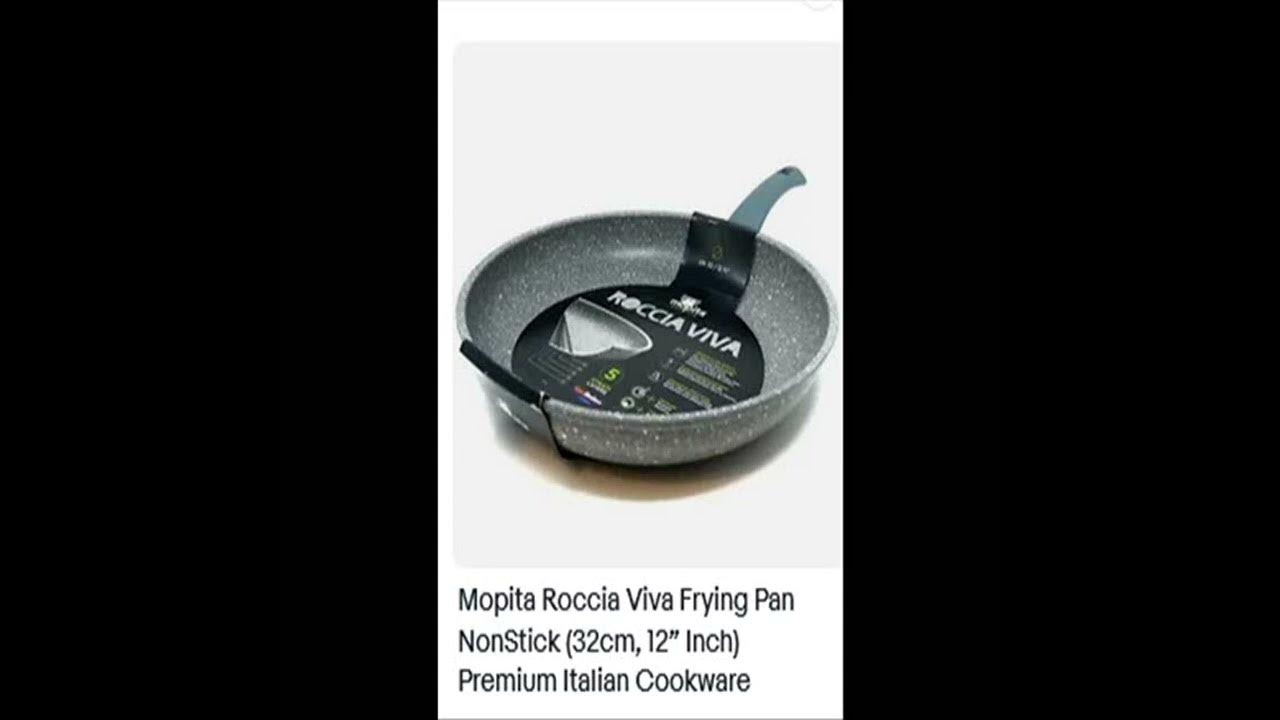
Mopita is associated with Italian-style cookware, including nonstick frying pans such as the Roccia Viva and Diamante lines shown in product listings. Some listings describe forged or other aluminum construction with a nonstick finish. These descriptions help identify the general product type, but they do not provide enough information to confirm the chemical composition of every coating.
I would not treat an attractive finish, an Italian-made label, or a seller’s general safety statement as proof of chemical safety. The strongest evidence is model-specific documentation that identifies the materials and confirms that the finished cookware is suitable for food contact.
Source: i.ytimg.com
Everyday use
A Mopita pan with an intact, documented food-contact coating may be used for ordinary cooking within its temperature limits.
Main concern
The exact nonstick coating and its response to overheating or physical damage matter more than the brand name alone.
What remains uncertain
Without the exact model number and technical sheet, the coating chemistry and independent test status cannot be confirmed.
What Does the Brand Name Tell You?
A brand name helps you identify a manufacturer or product family. It does not tell you whether a particular pan uses PTFE, a ceramic-based finish, another polymer coating, or a combination of materials. Even products from the same brand can have different construction and care requirements.
Before making a purchase, look for the model name, product code, country of manufacture, coating description, and maximum temperature. If the seller cannot provide these details, the safety assessment remains incomplete.
Check the model
Find the exact model name or product code printed on the packaging or product label.
Check the coating
Look for an explicit material description rather than relying on terms such as stone, granite, or premium nonstick.
What Materials Are Used in Mopita Cookware?
The material of a pan affects its heat response, weight, care needs, and possible interaction with food. Product listings for some Mopita nonstick frying pans describe aluminum construction. Aluminum is widely used in cookware because it conducts heat well and helps a pan warm up quickly.
Aluminum itself is not the same thing as a nonstick coating. The metal forms the body of the pan, while a separate surface layer may cover the area that touches food. For this reason, both parts need to be considered when evaluating cookware safety.
The available product descriptions do not establish that every Mopita model uses the same aluminum grade or coating formula. Buyers should avoid assuming that one product’s specifications apply to the whole brand.
Source: i.pinimg.com
Aluminum body
Aluminum transfers heat efficiently and is common in frying pans. A coated cooking surface helps separate food from the underlying metal.
Nonstick finish
The finish reduces food sticking and makes cleaning easier. Its exact chemistry and condition are important safety factors.
Handles and lids
These parts may use different materials and have separate heat limits. Check whether they are suitable for oven use before placing the whole pan in an oven.
Is Aluminum Cookware Safe?
Aluminum cookware is commonly used for home cooking. Small amounts of aluminum can transfer from some cookware into food, and the amount can vary with the food, cooking time, temperature, and condition of the cooking surface.
Acidic and salty foods can increase metal transfer from exposed aluminum. Tomato sauce, vinegar-based dishes, and long-simmered acidic recipes deserve particular care when cooked in uncoated aluminum. A suitable, intact food-contact coating acts as a barrier between food and the aluminum body.
If a nonstick surface has worn away in large areas, the pan may no longer perform as intended. Follow the manufacturer’s advice about continued use rather than assuming that exposed metal is harmless in every cooking situation.
For normal cooking
Use the pan as directed and avoid damaging the protective cooking surface.
For acidic meals
Use suitable stainless steel or another recommended cookware type if the aluminum surface is exposed or the coating is damaged.
What Does Roccia Viva Mean?
Roccia Viva is a name used for a Mopita nonstick cookware line. Product images and listings describe frying pans with a textured or stone-style appearance. A stone-style name or visual texture does not prove that the cooking surface is made from natural stone.
The important detail is the actual coating formulation. Ask whether the finish is PTFE-based, ceramic-based, or another type of nonstick system. Also request information about the coating’s food-contact suitability and recommended care.
Do not judge by appearance
A speckled or stone-like finish does not identify its chemical ingredients.
Request technical details
A product data sheet is more useful than a vague claim that the surface is natural or non-toxic.
Are Mopita Nonstick Coatings Safe?
A nonstick coating can be suitable for cooking when it is designed for food contact and used within its limits. However, the term nonstick does not identify one specific chemical. Different coatings can have different heat limits, wear patterns, and care requirements.
One common nonstick material is polytetrafluoroethylene, or PTFE. PTFE is a fluoropolymer used on many traditional nonstick pans. German Federal Institute for Risk Assessment guidance updated in February 2025 states that properly used PTFE-coated cookware is not expected to cause adverse health effects, while warning against strong overheating, especially when a pan is empty.
This general evidence does not establish that a particular Mopita model uses PTFE. It also does not prove that all Mopita coatings are PFOA-free or PFAS-free. Those claims require specific product information.
Source: m.media-amazon.com
PTFE
A common nonstick polymer that is generally considered suitable for normal cooking when used as directed.
Ceramic-style coating
A different type of nonstick finish. The word ceramic does not by itself confirm the complete ingredients or safety performance.
Other coatings
Some products use proprietary coating systems. Ask for the exact material description instead of guessing.
Does PFOA-Free Mean the Pan Is Safe?
PFOA-free is a limited chemical claim. PFOA is one substance in the wider PFAS family, and it was formerly used in the production of some fluoropolymer coatings. A statement that a pan is PFOA-free does not automatically mean that the finished product contains no PFAS.
It also does not establish whether the pan has passed food-contact migration testing. A more useful product assessment identifies the coating material, states which substances are excluded, and provides documentation for the finished cookware.
If avoiding all PFAS is a personal priority, ask the manufacturer whether the complete cooking surface is free of intentionally added PFAS. Do not rely on a PFOA-free label alone.
PFOA-free
Means the product or its manufacture meets a specific PFOA-related claim. It does not prove the absence of every PFAS.
PFAS-free
A broader claim that should be supported by a clear definition and product-specific information.
Food-contact compliance
Addresses whether the finished product meets relevant requirements for contact with food.
Can a Damaged Nonstick Coating Harm You?
A scratched coating does not automatically mean that a pan will cause poisoning. However, peeling, flaking, and deep damage are reasons to stop using a nonstick pan and contact the manufacturer about replacement.
The concern is not only possible particle transfer. Physical damage can expose the underlying metal, reduce the pan’s performance, and make it harder to clean. A surface that is visibly breaking down should not be treated as a normal cooking surface.
Small marks on the outside of a pan are different from damage on the food-contact surface. Inspect the inside carefully, especially around the center, edges, and areas that receive the most utensil contact.
Minor surface marks
Check the manufacturer’s guidance and monitor the cooking surface. Avoid scraping or further abrasion.
Peeling or flaking
Stop cooking with the pan and seek replacement or manufacturer advice.
Deep scratches
Treat extensive damage as a reason to retire the pan rather than trying to repair its coating at home.
Can Mopita Cookware Release Harmful Fumes?
The main overheating concern applies if a Mopita pan uses a PTFE-based nonstick coating. Strong heat can cause PTFE to break down and release fumes that may harm people and pet birds. The risk rises when an empty pan is left over a hot burner.
The German Federal Institute for Risk Assessment identifies temperatures around 360 degrees Celsius as a level at which PTFE can decompose and release hazardous gases. Health Canada advises consumers not to heat nonstick cookware above 260 degrees Celsius or 500 degrees Fahrenheit. These figures are precautionary guidance, not a confirmed Mopita temperature rating.
Because the exact coating on each Mopita model is not established here, the safest approach is to follow the product’s own lower temperature limit. Do not test the pan’s heat tolerance by leaving it empty on a burner.
Source: curee.org
Never heat an empty pan for long
Add food or a suitable cooking fat before heating, unless the product instructions state otherwise.
Choose low or medium heat
Nonstick pans usually work well without the highest burner setting.
Ventilate the kitchen
Use an exhaust fan or open a window while cooking.
Keep birds away
Birds are highly sensitive to certain overheated nonstick fumes. Keep pet birds away from cooking fumes and the kitchen.
What If a Nonstick Pan Was Accidentally Overheated?
Turn off the burner if a pan begins smoking or becomes unusually hot. Do not add cold water to a severely overheated pan, and avoid leaning over it to inspect the coating. Move people and pets away from the fumes and ventilate the room when it is safe to do so.
If anyone develops breathing difficulty, chest discomfort, fever, or flu-like symptoms after exposure, seek medical advice or contact a poison center. Serious symptoms require urgent medical attention. Pet birds exposed to fumes need immediate veterinary attention.
First action
Switch off the heat and move away from the fumes.
Next action
Ventilate the room safely and do not reuse a pan that has visibly deteriorated.
When to seek help
Get medical or veterinary advice if symptoms develop after exposure.
How to Use Mopita Cookware More Safely
Good cooking habits help protect a nonstick pan and reduce avoidable exposure to excessive heat. Think of the coating as a protective layer: gentle care helps it do its job for longer.
Start by reading the instructions supplied with the exact model. Check the stated heat limit, compatible cooktops, oven restrictions, utensil advice, and cleaning instructions before the first use.
Source: m.media-amazon.com
Use moderate heat
Low and medium settings are generally suitable for nonstick cooking. Use another pan type for tasks that need intense searing.
Choose soft utensils
Wood, silicone, or other manufacturer-approved utensils help reduce scratches.
Clean gently
Use warm water, mild dish soap, and a soft sponge unless the product instructions specify another method.
Avoid sudden temperature changes
Allow a hot pan to cool before washing it. Thermal shock can affect the pan and its coating.
A Safe Step-by-Step Cooking Routine
Before cooking, inspect the food-contact surface for peeling, deep scratches, or loose coating. If the surface is breaking down, do not use the pan.
Place the pan on a suitable burner and add food or cooking fat before heating. Use a low or medium setting, and keep the handle secure and away from the edge of the stove. Avoid leaving the pan unattended.
Use a soft-edged utensil to turn or stir food. Once cooking is complete, switch off the burner and let the pan cool naturally. Wash it gently and dry it before storage.
Before cooking
Inspect the surface, check the burner compatibility, and confirm that the pan is in good condition.
During cooking
Use moderate heat, approved utensils, and suitable ventilation.
After cooking
Cool the pan, clean it gently, and store it without stacking heavy cookware directly on the coating.
How to Store Nonstick Pans
Storage can cause scratches even when cooking habits are careful. Metal lids, sharp pan edges, and heavy pots can rub against the nonstick surface when cookware is stacked.
Use a soft pan protector or clean cloth between stacked pans. Hang the pan only if its handle and hanging hole are designed for that purpose, and avoid placing heavy objects inside it.
Separate stacked pans
Use a soft protective layer between cooking surfaces.
Keep the interior clear
Do not store knives, metal tools, or heavy items inside the pan.
How to Check Whether a Mopita Pan Meets Food Safety Requirements
The best way to assess an unfamiliar Mopita product is to request documentation for its exact model. General brand claims and marketplace descriptions are not substitutes for a technical data sheet or food-contact compliance statement.
Mopita products marketed in Europe should be considered in the context of the European Union’s food-contact material framework. Regulation (EC) No 1935/2004 requires food-contact materials to be made so that they do not transfer constituents into food at levels that could endanger health or cause unacceptable changes to food.
Compliance with a legal framework is meaningful, but a general reference to European rules does not prove that an individual pan has been independently tested or that a seller’s description is accurate. Ask for the relevant document and check that it matches the model you plan to buy.
Source: mykitchenhints.com
Model-specific identification
The document should identify the product or product family clearly enough to match the pan.
Food-contact statement
Look for a clear statement that the finished cookware is intended for food contact and complies with applicable requirements.
Coating information
Ask for the coating type and any available information about substances excluded from the finish.
Use limits
Check the stated maximum temperature, oven restrictions, cleaning method, and cooktop compatibility.
Questions to Ask the Seller or Manufacturer
If a listing does not explain the coating, contact the seller before buying. A clear answer should name the coating type rather than use broad terms such as safe, healthy, or chemical-free.
You can ask whether the exact pan contains PTFE or other intentionally added PFAS, whether it is PFOA-free, and whether a food-contact compliance document is available. Also ask whether the product is suitable for gas, electric, ceramic, and induction cooktops.
What is the coating?
Ask for the exact material or coating system used on the cooking surface.
Is there a compliance document?
Request a model-specific food-contact declaration or supporting technical document.
What are the heat limits?
Confirm the maximum safe stovetop and oven temperatures.
How should it be maintained?
Ask about utensils, dishwasher use, cleaning products, and replacement criteria.
Mopita Cookware Compared With Other Common Cookware Types
The right cookware depends on how you cook and which materials you prefer to use. Nonstick pans are convenient for eggs, pancakes, and delicate foods, while stainless steel and cast iron suit different cooking tasks.
If the exact Mopita coating is not documented, comparing it with other cookware types can help you choose an option with clearer material information. The table below compares general cookware categories, not laboratory-tested Mopita performance.
Source: thecookwareadvisor.com
Nonstick aluminum
Useful for low- to medium-heat cooking and easy food release. The coating needs careful handling.
Has no traditional nonstick coating and is suitable for browning and many high-heat tasks when used correctly.
Cast iron
Can handle high heat and retain heat well, but it is heavy and needs suitable care.
Enameled cookware
Has a glass-like enamel surface over a metal base. Avoid using pieces with badly chipped food-contact enamel.
Which Cookware Is Better for Your Kitchen?
Choose a documented nonstick pan if you often cook eggs, fish, or foods that are hard to release from a metal surface. Choose stainless steel if you want to avoid a traditional nonstick coating and regularly cook foods that need browning.
Cast iron is useful for searing and oven cooking when its weight and care needs suit your kitchen. Enameled cookware can be helpful for stews and acidic recipes, provided the enamel remains intact and the product is suitable for the intended use.
You do not need to replace every pan with one material. A mixed cookware set can cover different cooking tasks while reducing reliance on any single surface.
For eggs and pancakes
A sound nonstick pan can make cooking and cleanup easier.
For browning and searing
Stainless steel or suitable cast iron is often more appropriate than a nonstick pan.
For long acidic simmering
Use stainless steel or intact, suitable enamel rather than exposed aluminum.
Common Mistakes That Can Make Nonstick Cookware Less Safe
Most avoidable problems come from excess heat, surface damage, or incorrect cleaning. A pan that is designed for normal home cooking should not be treated like a heavy-duty searing pan.
These habits can shorten the life of a nonstick surface and may create avoidable exposure to fumes or damaged coating material.
Source: thekitcheneye.com
Heating an empty pan
An empty pan can heat rapidly and may exceed the coating’s intended temperature range.
Using metal tools
Metal forks, knives, and spatulas can scratch or damage some nonstick finishes.
Scrubbing with steel wool
Abrasive pads and harsh cleaners can wear away the surface.
Ignoring visible damage
Peeling and flaking should not be treated as normal wear that can be repaired with seasoning.
Assuming dishwasher safety
Dishwasher suitability varies by model. Repeated exposure to strong detergents and high heat may shorten the life of some finishes.
Using high heat for every meal
Nonstick cookware is generally intended for lower or moderate heat rather than prolonged high-temperature searing.
When Should You Replace a Mopita Pan?
Replace a nonstick pan when the food-contact surface shows substantial peeling, flaking, blistering, or coating separation. A deep scratch that exposes the base material is also a good reason to stop using the pan and seek model-specific advice.
Discoloration alone does not always mean a pan is unsafe. However, unusual changes combined with a rough, loose, or deteriorating surface deserve attention. When in doubt, stop using the pan until the manufacturer can assess the condition.
Replace it
The coating is peeling, flaking, blistering, or separating.
Seek advice
The surface has deep damage, unexplained changes, or exposed base metal.
Do not attempt repairs
Household paint, sealants, and improvised coatings are not suitable ways to restore a food-contact surface.
Research Limitations and Questions Still Needing Confirmation
A useful safety guide must separate general cookware science from facts about a specific product. Official guidance explains how PTFE cookware should be used, and European rules describe general food-contact requirements. Neither source proves that every Mopita pan has a particular coating or has passed a particular test.
The available product images and descriptions identify Mopita cookware examples, but they do not replace a manufacturer technical sheet. No independent laboratory analysis of the specific Mopita models discussed here was conducted for this article.
The reviewed material also does not establish a complete list of Mopita coating ingredients, a universal oven-temperature limit, or a model-by-model PFAS status. These points should remain unconfirmed until the manufacturer provides suitable records.
Source: i.ytimg.com
Coating chemistry
The precise coating formulation for each model needs confirmation from its manufacturer.
Independent testing
No independent migration or emissions test result for the exact models discussed here has been verified.
Temperature limits
The correct limit must come from the instructions for the exact product, not from a general estimate.
PFAS claims
PFOA-free and PFAS-free claims should be checked against written, model-specific evidence.
Next-Question Gap Map
The following questions are inferred from the main buying and safety task. They are useful follow-up needs, not verified search-volume findings. They address practical details that a reader may still need after learning the general safety principles.
Does Mopita use PTFE?
Reader stage: before purchase. Basis: inferred next need. Coverage: not established by the available model descriptions. Benefit: confirms the coating chemistry and helps readers make an informed choice. Priority: high.
Are Mopita pans PFOA-free or PFAS-free?
Reader stage: product comparison. Basis: inferred next need. Coverage: not confirmed for every model. Benefit: separates narrow chemical claims from broader PFAS concerns. Priority: high.
Can a Mopita frying pan go in the oven?
Reader stage: use and maintenance. Basis: inferred next need. Coverage: model-specific limit not established. Benefit: prevents unsafe use of unsuitable handles or coatings. Priority: high.
Is a scratched Mopita pan safe to use?
Reader stage: after purchase. Basis: inferred next need. Coverage: general nonstick guidance provided, but exact product advice needs confirmation. Benefit: helps readers decide when to stop using a damaged pan. Priority: high.
Is Mopita cookware dishwasher-safe?
Reader stage: cleaning. Basis: inferred next need. Coverage: not confirmed for every model. Benefit: helps prevent premature coating wear. Priority: medium.
Frequently Asked Questions
Q
Is Mopita cookware PFOA-free?
The PFOA status of every Mopita cookware model cannot be confirmed from the available product descriptions. Check the packaging or request a written statement from the manufacturer for the exact model.
Remember that PFOA-free does not automatically mean PFAS-free. If you want to avoid all intentionally added PFAS, ask for that broader claim and supporting product information.
Q
Is Mopita Roccia Viva cookware safe?
Mopita Roccia Viva may be suitable for normal cooking if the exact model has a food-contact-suitable coating that remains intact and is used within its stated heat limits. Its stone-style name does not identify the coating’s chemical composition.
Confirm the coating type, food-contact documentation, and care instructions before relying on general safety claims.
Q
Can I use metal utensils on Mopita nonstick pans?
Avoid metal utensils unless the instructions for your exact model clearly permit them. Wooden or silicone utensils are a more cautious choice because they are less likely to scratch the nonstick surface.
If the pan already has deep scratches or peeling, stop using it until you receive suitable manufacturer advice.
Q
Can I cook acidic foods in Mopita aluminum cookware?
If the aluminum body has an intact food-contact coating, follow the manufacturer’s instructions for acidic foods. If the coating is badly damaged or aluminum is exposed, avoid long cooking with tomato, vinegar, or other acidic ingredients.
Stainless steel is a practical alternative for long-simmered acidic recipes.
Q
Is Mopita cookware safe for high-heat cooking?
Do not assume that Mopita nonstick cookware is suitable for high-heat searing. Nonstick pans are generally better suited to low- and medium-heat cooking, and overheating can damage some coating systems or release harmful fumes.
Use stainless steel or suitable cast iron for tasks that require intense heat. Always follow the maximum temperature printed in the instructions for the Mopita model.
Q
How long does Mopita nonstick cookware last?
There is no verified universal lifespan for all Mopita nonstick pans. Service life depends on the coating, cooking frequency, heat exposure, utensils, cleaning, and storage.
Replace the pan when its food-contact surface peels, flakes, blisters, or shows extensive damage. Visible condition is more useful than relying on a fixed number of years.
✦ Wrapping Up
Conclusion
So, is Mopita cookware safe? It may be safe for everyday cooking when the exact model uses suitable food-contact materials, its nonstick surface remains intact, and the pan is used according to its instructions. However, the available information does not support a blanket guarantee for every Mopita product or confirm that all models are free from PTFE or PFAS.
The biggest practical risks with nonstick cookware are overheating and damage to the cooking surface. Use moderate heat, avoid heating an empty pan, choose gentle utensils, and replace cookware that shows substantial peeling or flaking. These habits help protect both the pan and the people using it.
Before buying a Mopita pan, check its model number and ask for its coating details, food-contact compliance statement, and temperature limits. If the seller cannot provide clear answers, consider a cookware option with more complete and verifiable material documentation.
💡 Key Takeaway
Check the exact Mopita model before buying. Confirm its coating chemistry and food-contact documentation, follow its heat limits, and stop using it if the cooking surface starts peeling or flaking.