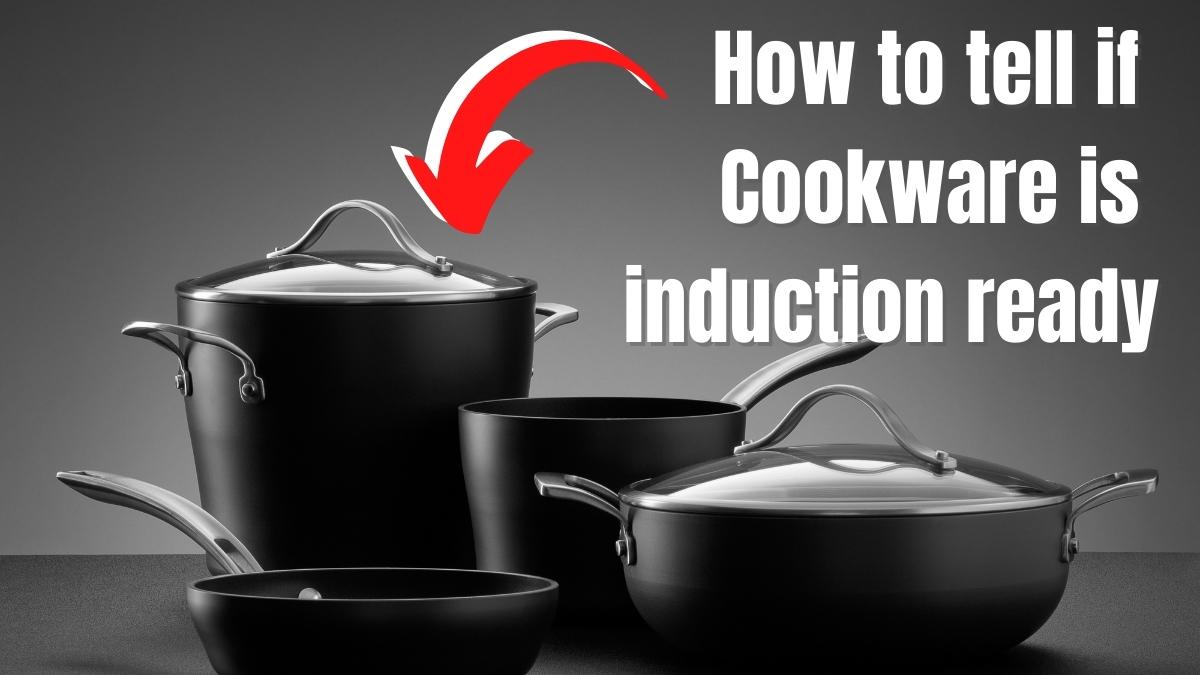
The easiest way to identify induction cookware is to place a magnet against its bottom. If the magnet sticks firmly, the pan is likely suitable for an induction cooktop.
If you are upgrading your kitchen in the United States to an induction range, you may wonder whether your current pots and pans will still work. Many American households already own stainless steel, aluminum, cast iron, or nonstick cookware. However, not every pan works with induction technology, even when it looks like a good match.
The good news is that checking your cookware is simple. You do not need special tools or technical knowledge. A small refrigerator magnet, a quick look at the pan’s bottom, and a check of its product label can help you identify induction-ready cookware.
This guide explains how to identify induction cookware at home and while shopping. You will learn how to read induction symbols, perform the magnet test, recognize compatible materials, and spot pans that may cause problems. It also explains what to do when a magnet sticks but your induction cooktop does not recognize the pan.
Induction cookware is a pot or pan designed with a magnetic base that allows it to work with an induction cooktop. Unlike a gas stove or a standard electric burner, an induction cooktop uses an electromagnetic field to heat compatible cookware directly.
The cooktop contains a copper coil beneath its glass surface. When you turn on a cooking zone and place a suitable pan over it, the coil creates a changing magnetic field. This field produces electrical currents in the magnetic metal of the pan, generating heat inside the cookware.
This process explains why ordinary aluminum, copper, glass, and ceramic pans usually do not work on induction appliances. These materials do not have the magnetic properties needed for standard induction heating unless the cookware includes a compatible magnetic base.
Induction cookware does not always look different from regular cookware. A stainless steel saucepan or a nonstick frying pan may look ordinary but still contain a magnetic steel layer underneath.
Magnetic base
The bottom must contain a suitable ferromagnetic material, such as iron or magnetic stainless steel.
Flat cooking surface
A smooth, flat base helps the pan sit correctly on the cooktop and supports reliable heating.
Compatible dimensions
The magnetic part of the pan must meet the minimum size requirements of the cooking zone.
How Induction Cookware Differs From Regular Cookware
Regular cookware is made to work with heat from flames or electric heating elements. It does not always need a magnetic base. Induction cookware has an additional requirement: its bottom must interact with the magnetic field produced by the appliance.
For example, a traditional aluminum frying pan may work perfectly on a gas stove but fail to heat on an induction range. A similar aluminum pan with a bonded magnetic stainless steel base may work on both types of stove.
Gas and electric cookware
These pans can use a wider range of materials because their heat source does not depend on magnetic attraction.
Induction cookware
These pans need a magnetic cooking base that the induction appliance can detect and heat.
1. Use a Magnet to Identify Induction Cookware
The magnet test is the simplest and most useful way to identify induction-compatible cookware. It checks whether the pan has a magnetic material in its base, which is the main requirement for induction cooking.
You can use an ordinary refrigerator magnet. A stronger household magnet may make the result easier to judge, especially when the pan has a thick or layered base.
The test takes only a few seconds. You do not need to turn on your cooktop or heat the pan.
What you need
A small refrigerator magnet or another household magnet and the pan you want to check.
Where to test
The flat bottom of the cookware, rather than the handle, lid, or side wall.
Step-by-Step Magnet Test
First, turn the cookware upside down and place it on a stable surface. Make sure the bottom is clean and dry so you can inspect the base clearly.
Next, hold the magnet against the center of the pan’s bottom. Notice whether it pulls toward the metal and stays attached without support.
Move the magnet across several areas of the base. Check the center, outer areas, and any visible metal sections. This step matters because some pans have a magnetic layer in only part of their bottom.
Finally, compare the result with the manufacturer’s induction compatibility information. A firm magnetic pull combined with a clear induction label provides a much stronger identification than appearance alone.
Strong attraction
The pan has magnetic material in the tested area and is a promising candidate for induction use.
Weak attraction
The pan may have a limited or thin magnetic section. Check the manufacturer’s instructions and test the cooktop before relying on it.
No attraction
The tested area is not magnetic. If the whole base produces this result, the pan is generally unsuitable for a standard induction cooktop.
What If the Magnet Only Sticks to One Part?
A magnet that sticks only to a small circle or central plate does not necessarily mean the pan is unusable. Some cookware uses a bonded magnetic disc beneath an aluminum or copper body.
However, the size and position of that magnetic section matter. If the section is too small for your cooking zone, the cooktop may fail to detect the pan or may deliver less effective heating.
Check the actual magnetic area rather than relying on the pan’s advertised top diameter. The manufacturer’s specifications and your appliance manual can help you decide whether the combination will work.
Large magnetic base
Usually offers better contact with the induction cooking zone.
Small magnetic disc
May work on some burners but can cause detection or performance problems on others.
2. Look for the Induction Cookware Symbol
Another reliable way to identify induction cookware is to look for the induction compatibility symbol. Cookware manufacturers often print this mark on the bottom of a pan, its packaging, or its instruction booklet.
The symbol commonly resembles a small coiled spring, a series of loops, or several curved horizontal lines. It represents the induction coil used to create the magnetic field beneath the cooktop.
The exact artwork can vary between manufacturers and product lines. Therefore, do not reject a pan simply because its symbol looks slightly different from another brand’s marking.
If you find the symbol, check the product name and model number against the manufacturer’s official specifications. This is especially useful when buying cookware online or when the bottom of an older pan has worn markings.
Check the pan bottom
Turn the pan over and look for a small induction mark near the center or around the manufacturer’s name.
Inspect the packaging
Look for wording such as induction compatible, induction ready, or suitable for induction cooktops.
Read the product details
Confirm compatibility through the manufacturer’s official product page or manual.
What Does the Induction Symbol Look Like?
The most common induction mark looks like a short row of connected loops or a horizontal coil. Some versions resemble a compact spring or a set of curved lines placed above one another.
It is not the same as a gas, electric, oven-safe, or dishwasher-safe symbol. Those marks describe other product features and do not confirm magnetic compatibility.
A symbol printed on genuine manufacturer packaging is useful evidence, but the magnet test provides an additional physical check. Using both methods helps reduce confusion when cookware has several different labels.
Induction mark
Indicates that the cookware is intended for use with induction heating.
Oven-safe mark
Describes oven use and does not automatically mean that the pan works on induction.
Dishwasher-safe mark
Describes cleaning compatibility rather than the cookware’s magnetic properties.
3. Identify Induction-Compatible Cookware by Material
Cookware material provides another useful clue, but the material name alone is not always enough. Some metals are naturally magnetic, while others need a special magnetic layer to work with induction.
Cast iron and carbon steel are generally good candidates because they contain iron. Magnetic stainless steel also works, although some stainless steel grades are not sufficiently magnetic.
Aluminum and copper cookware usually need a bonded magnetic base. This construction allows the pan to keep the heat-transfer benefits of its main material while meeting the cooktop’s magnetic requirements.
Cast Iron Cookware
Cast iron cookware is generally induction compatible because it contains iron and responds strongly to magnets. Traditional cast iron skillets, Dutch ovens, and griddles often work with induction ranges.
However, inspect the bottom before use. A severely warped base may not sit properly on the glass surface, and a rough or damaged finish can scratch the cooktop.
Cast iron is also heavy. Lift it instead of sliding it across the glass, and follow the appliance manufacturer’s instructions for cookware weight and size.
Magnetic response
Most traditional cast iron pans attract a magnet firmly.
Main limitation
Heavy or uneven bottoms may be difficult to handle and may provide poor contact with the cooktop.
Stainless Steel Cookware
Stainless steel cookware can work with induction, but not every stainless steel pan is compatible. Different stainless steel grades have different magnetic properties.
Some stainless steel pans contain a magnetic outer layer with an aluminum or copper core. The magnetic layer allows the induction field to heat the pan, while the inner layers help spread heat through the cooking surface.
If you own a stainless steel saucepan or stockpot, test its base with a magnet instead of assuming that all stainless steel is induction ready.
Magnetic stainless steel
Usually suitable when the magnetic base is designed for induction use.
Nonmagnetic stainless steel
May not work unless the cookware includes a separate compatible magnetic layer.
Aluminum Cookware
Ordinary aluminum cookware is not suitable for a standard induction cooktop because aluminum is not ferromagnetic. A magnet generally will not stick to a plain aluminum pan.
Some modern aluminum pans have a bonded stainless steel or iron-based induction plate underneath. These pans may look like ordinary aluminum cookware, but their special base makes them compatible.
When checking aluminum cookware, test the bottom rather than the sides. The magnetic layer may be limited to a circular plate underneath the pan.
Plain aluminum
Normally does not work directly on induction.
Aluminum with magnetic base
Can work when the magnetic base is designed for the specific induction application.
Copper Cookware
Copper is valued for its ability to spread heat, but pure copper cookware does not normally work on induction cooktops. The material does not provide the required magnetic response.
Some copper pans use a magnetic stainless steel base. These models can work with induction even though most of the visible pan body is copper.
Check the manufacturer’s specifications and test the bottom with a magnet. A decorative copper exterior does not prove that the pan is induction compatible.
Pure copper
Generally unsuitable for standard induction cooking.
Copper with magnetic steel
May be suitable if the manufacturer confirms induction compatibility.
Carbon Steel and Enameled Cookware
Carbon steel pans are usually induction compatible because their steel construction responds to magnets. They are often lighter than cast iron and can be useful for frying, searing, and stir-frying.
Enameled steel and enameled cast iron can also work. The enamel is a surface coating, so the important factor is the metal underneath it.
Do not assume that every item with an enamel or ceramic finish works on induction. Test the base and follow the product instructions.
Carbon steel
Usually magnetic and suitable when the base is flat and meets the cooktop’s size requirements.
Enameled steel
Generally compatible because the steel underneath the enamel is magnetic.
Enameled cast iron
Usually compatible when the cookware has a suitable base.
4. Check the Bottom Construction of the Pan
The bottom construction can tell you more about induction compatibility than the pan’s exterior appearance. Many modern cookware products use several metal layers joined together to improve heating and cooking performance.
For example, a stainless steel pan may have an aluminum core sandwiched between magnetic stainless steel layers. The aluminum helps distribute heat, while the magnetic outer layer allows the pan to work with induction.
Other cookware uses a bonded magnetic disc attached to an aluminum body. Both designs can be compatible, provided the magnetic area and construction meet the cooktop manufacturer’s requirements.
Look for product descriptions that mention induction base, magnetic stainless steel, bonded induction plate, or multi-layer induction construction. These terms are useful clues, but always confirm them with the official specifications.
Fully clad construction
Uses several metal layers through the base and often the side walls. It can provide a combination of induction compatibility and heat distribution.
Bonded magnetic disc
Uses a magnetic plate attached to the bottom of another metal body. The magnetic disc must be large enough for the cooking zone.
Single-layer magnetic steel
Can work with induction when its base is suitable and the manufacturer approves the design.
Why the Magnetic Area Matters
A pan can have a large advertised diameter but a much smaller magnetic base. This difference may affect how well the induction cooktop detects the cookware.
For example, an 11-inch frying pan might have a magnetic base measuring only 7.25 inches. The cooking zone responds to the magnetic area, not simply the width measured across the top rim.
This is why checking the flat bottom diameter is more useful than relying on the product’s headline size.
Measure the base
Use the flat magnetic section as your main reference.
Check the cooking zone
Compare the magnetic base size with the minimum size allowed by your induction appliance.
5. Test the Cookware on an Induction Cooktop
A real cooktop test is a useful final check when the magnet test and product label suggest that the pan is compatible. The appliance can confirm whether it detects the cookware and begins heating.
Before testing, read the cooktop manual. Check the recommended pan size, suitable materials, and any special instructions for the cooking zone you plan to use.
Place the empty, cool pan on the correct cooking zone first. If the appliance detects it, add a suitable amount of water and follow the manufacturer’s normal operating instructions.
Never leave a pan unattended during this test. Start with a moderate setting rather than immediately using the highest power.
Step-by-Step Cooktop Compatibility Test
Start by cleaning the pan bottom and the glass cooking surface. Remove any dirt or loose material that might affect contact.
Choose a cooking zone that matches the pan’s magnetic base. Center the pan over the marked cooking area and switch on the appliance according to its manual.
If the cooktop detects the pan, use a moderate heat setting and observe whether the water begins to warm. A suitable pan should heat without repeated cookware detection warnings.
Switch off the cooking zone when the test is complete. Allow the pan and cooking surface to cool before removing or inspecting the cookware.
Successful detection
The appliance recognizes the cookware and allows the selected cooking zone to operate.
Water begins heating
The pan is receiving energy from the induction system.
Repeated detection error
Check the pan size, magnetic base, placement, and appliance instructions before trying another suitable pan.
What If the Cooktop Does Not Recognize the Pan?
A failed detection test does not always mean that the pan contains no magnetic material. The cookware may be too small for the selected zone, poorly centered, or designed with a magnetic base that does not cover enough of the bottom.
Try a smaller cooking zone if the manual permits it. Reposition the pan and check the actual magnetic base diameter. If the problem continues, compare the cookware model with the manufacturer’s compatibility information.
If several known-compatible pans also fail on the same cooking zone, the problem may involve the appliance rather than the cookware. Consult the cooktop manual or contact the manufacturer for support.
Check pan position
Center the magnetic base over the cooking zone.
Check pan size
Use a zone that matches the actual magnetic base diameter.
Check another pan
Try cookware that is already confirmed to work with induction.
6. Compare Common Cookware Materials
The following table gives a quick overview of common cookware materials and their usual compatibility with induction cooktops. Use it as an initial guide rather than a substitute for the magnet test or product specifications.
The most important distinction is whether the bottom contains a suitable magnetic material. A pan’s main body can be aluminum or copper and still work if its base includes a compatible induction layer.
Cast iron
Usually compatible. Check that the bottom is flat and suitable for the glass surface.
Carbon steel
Usually compatible because the metal is magnetic.
Magnetic stainless steel
Compatible when the base is designed for induction use.
Plain aluminum
Usually incompatible without a magnetic base.
Plain copper
Usually incompatible without a magnetic base.
Glass and ceramic
Generally incompatible with standard induction cooktops unless a specifically designed magnetic base is part of the product.
Quick Material Comparison Table
Use the table to narrow down which pans deserve a magnet test. Remember that cookware construction can change the result, so the material name is not a final compatibility guarantee.
Cast iron and carbon steel
Generally work because their iron-based construction is magnetic.
Stainless steel
Depends on the grade and whether the base contains magnetic steel.
Aluminum and copper
Need a magnetic base or special induction construction.
Glass, porcelain, and ordinary ceramic
Do not work directly with standard induction heating.
7. How to Identify Induction Cookware When Shopping
When shopping for new cookware in the United States, checking induction compatibility before buying can prevent wasted money and the trouble of returning unsuitable pans.
Online product descriptions can be useful, but read beyond the product title. Some listings mention stainless steel or aluminum without clearly explaining whether the base is magnetic.
If you are shopping in a physical store, turn the pan over and look for an induction symbol. If the store allows it, use a small magnet to test the bottom. For online purchases, look for the manufacturer’s official compatibility statement and model specifications.
Read the full product description
Look for explicit wording that confirms induction compatibility rather than relying on the general material description.
Check the packaging
Look for an induction symbol or a clear statement that the cookware is suitable for induction cooktops.
Inspect the base design
A flat, stable, magnetic base is a useful sign of suitable construction.
Verify the model
Use the manufacturer’s official product page or manual to confirm the exact cookware model.
Questions to Ask Before Buying
A few simple questions can help you avoid choosing cookware that looks suitable but does not meet your appliance’s requirements. This is especially helpful when buying a full cookware set with several pan sizes.
Ask whether every piece in the set is induction compatible. Some collections contain different constructions, so one compatible saucepan does not automatically prove that every skillet, pot, or accessory will work.
Is every pan induction compatible?
Confirm the status of each included piece rather than assuming that the entire set uses identical construction.
What is the magnetic base diameter?
Check whether the base will work with the minimum pan-size requirements of your cooktop.
Is the bottom flat?
Look for a stable base without major warping or damage.
Does the manufacturer provide instructions?
A clear manual helps confirm compatibility, cleaning rules, and safe use.
8. Common Mistakes When Identifying Induction Cookware
Several common assumptions can lead people to identify cookware incorrectly. A pan may look expensive, have a thick metal body, or carry a stainless steel label and still fail to work with an induction cooktop.
The safest approach is to check the magnetic base, confirm the product specifications, and match the cookware to the appliance’s requirements.
Different stainless steel grades have different magnetic properties. Always test the base.
Assuming heavy cookware is compatible
Weight does not prove that a pan has the magnetic properties required for induction.
Testing only the handle
Some handles contain magnetic metal even when the cooking base does not. Always test the bottom.
Ignoring the size of the magnetic base
A small magnetic disc may not meet the minimum detection size of a particular cooking zone.
Confusing oven-safe with induction-ready
Oven safety and induction compatibility are separate features. One does not prove the other.
Assuming every nonstick pan works
Nonstick is a surface coating. The metal underneath determines whether the pan can work with induction.
Does a Magnet Test Guarantee Good Cooking Performance?
No. A magnet test checks for magnetic material, but it does not measure how evenly the pan heats or how well it performs during cooking.
A pan may attract a magnet and still have a thin, uneven, or poorly designed base. It may also fail to match the minimum size requirements of your cooktop.
For better results, look for cookware with a flat, stable base and clear manufacturer approval. If possible, confirm the cookware with the actual induction appliance.
Compatibility
The magnetic base allows the cookware to interact with the induction field.
Performance
Base thickness, construction, size, and heat distribution affect cooking results.
9. Tips for Using and Caring for Induction Cookware
Once you identify compatible cookware, proper use can help protect both your pans and the cooktop. Induction ranges often have smooth glass surfaces, so the condition of the pan bottom matters.
Before cooking, check that the base is clean and free from stuck food or rough debris. Place the pan gently on the cooking zone instead of sliding it across the glass.
Use cookware that fits the selected burner and follow the manufacturer’s temperature and care instructions. Some pans can become very hot quickly on induction, so avoid leaving them unattended.
Keep the base clean
Remove food residue and debris that could affect contact or scratch the cooking surface.
Lift instead of sliding
Move heavy pans by lifting them to reduce the chance of scratching the glass.
Avoid damaged cookware
Do not use pans with severe warping, loose bonded plates, or rough damaged edges.
Use suitable heat settings
Start with moderate heat when learning how quickly a particular pan responds to induction.
Follow the appliance manual
Use the stated cookware sizes and operating limits for your specific cooktop.
Can Induction Cookware Also Work on Gas and Electric Stoves?
Many induction-compatible pans can also be used on gas and traditional electric cooktops. Cast iron, carbon steel, and suitable stainless steel cookware are common examples.
However, the pan must still be approved for the other heat source. Some cookware has specific restrictions involving open flames, maximum temperatures, or particular handle materials.
Always check the product instructions. Induction compatibility does not automatically mean that every cooking method is suitable.
Gas stove
Many induction-ready metal pans can also work on gas when their manufacturers permit it.
Electric coil stove
Compatible metal cookware can often be used if its base is suitable for the heating element.
Glass-top electric stove
Check the manufacturer’s surface-care guidance and avoid sliding rough or heavy pans.
If your cookware passes one test but fails another, work through the problem step by step. Start with the easiest checks before assuming that the pan or cooktop is defective.
The magnet result, base size, pan position, and appliance instructions are the main things to review. Testing a second pan that is already known to be induction compatible can also help separate cookware problems from appliance problems.
The magnet sticks, but the cooktop does not work
The magnetic area may be too small, the pan may be off-center, or the selected cooking zone may require a larger base.
The pan heats unevenly
The magnetic base may cover only part of the bottom, or the cookware may have a construction that distributes heat poorly.
The pan makes clicking or buzzing sounds
Some noise can occur during induction cooking because of electromagnetic activity and cookware construction. Check the appliance manual if the noise is unusual or accompanied by an error.
The pan rocks on the glass
The bottom may be warped or uneven. Stop using it if it cannot sit securely and follow the cookware manufacturer’s guidance.
When to Contact the Cooktop Manufacturer
Contact the appliance manufacturer if several confirmed induction-compatible pans fail to work on the same cooking zone. An error code, repeated shutdown, or unusual operating behavior may point to an appliance issue.
Provide the model number of the cooktop and describe the cookware you tested. This information can help customer support check the correct pan-size requirements and troubleshooting steps.
Do not attempt to open or repair the induction cooktop yourself. Internal electrical components should be inspected by a qualified service professional.
Repeated error messages
Check the appliance manual and contact the manufacturer’s support team if the issue continues.
Multiple compatible pans fail
The cooking zone may need professional inspection.
Visible cooktop damage
Stop using a damaged glass surface and follow the manufacturer’s repair guidance.
11. A Simple Checklist for Identifying Induction Cookware
If you want a quick decision before using an unfamiliar pan, follow this checklist. It combines the main identification methods into one practical process.
The goal is to confirm both magnetic compatibility and suitable physical construction. A pan that meets these checks is a much stronger candidate than one selected only by its material name or appearance.
Check the induction label
Look for an induction symbol or an explicit compatibility statement from the manufacturer.
Perform a magnet test
Place a magnet against several areas of the pan’s bottom and check for a firm pull.
Inspect the base
Look for a flat, smooth, stable bottom without major damage.
Check the magnetic diameter
Make sure the magnetic section meets the minimum size required by your cooking zone.
Verify the manufacturer’s specifications
Check the exact model information rather than relying on a general material description.
Test the cookware safely
Use the correct cooking zone and follow the appliance instructions to confirm detection and heating.
The Best Order for Checking an Unknown Pan
Start with the magnet because it is quick, inexpensive, and does not require electricity. Then look for the induction symbol and verify the manufacturer’s information.
Next, inspect the bottom for damage and measure the magnetic area if the pan has a bonded base. Finish with a controlled cooktop test when the previous checks support compatibility.
This order avoids unnecessary testing and gives you a clear reason if the pan does not work.
First
Check magnetic attraction.
Second
Read the induction symbol and product details.
Third
Inspect the base shape, condition, and size.
Fourth
Confirm compatibility using the cooktop manual and a safe operating test.
Research Notes and Next-Question Gap Map
This guide uses manufacturer support information and appliance documentation available on November 1, 2026. The reviewed material includes Whirlpool’s induction cookware guidance, Samsung’s cookware breakdown, GE Appliances’ cookware size and shape guidance, Wolf’s induction cookware suggestions, and Electrolux’s induction compatibility instructions.
The reviewed pages explain the magnet test and common compatible materials. However, a useful practical distinction is that magnetic attraction, appliance detection, and good cooking performance are three related but different checks.
This guide addresses that distinction by explaining how to test several areas of a pan’s base, why magnetic base diameter matters, and how to troubleshoot cookware that attracts a magnet but is not recognized by an appliance. These are practical additions based on the reviewed manufacturer guidance, not claims of newly conducted laboratory testing.
Observed question: How can I tell if my old stainless steel pan works?
Reader stage: Before use. The reviewed manufacturer guidance explains that some stainless steel works and some does not. This guide adds a practical magnet test and model verification. Priority: High.
Inferred next need: Does a small magnetic base work on every burner?
Reader stage: Compatibility check. GE and Whirlpool explain the importance of magnetic base size and cooking-zone dimensions. This guide explains why top-rim measurements can be misleading. Priority: High.
Inferred next need: What should I do when a magnet sticks but the cooktop rejects the pan?
Reader stage: Troubleshooting. Manufacturer guidance discusses detection problems and minimum pan sizes. This guide combines positioning, magnetic-area, and appliance checks. Priority: High.
Inferred next need: Can induction-ready pans work on gas stoves?
Reader stage: After identification. The answer depends on the cookware’s other heat-source ratings. This guide separates induction compatibility from general stove compatibility. Priority: Medium.
Inferred next need: Is a magnet test enough to judge pan quality?
Reader stage: Buying decision. Manufacturer guidance distinguishes compatibility from base construction and cooking performance. This guide explains the difference. Priority: High.
Reviewed Evidence and Coverage
Whirlpool’s official support guidance explains magnetic materials, partial magnetic bases, and cookware sizing. Samsung’s US support page describes magnetic-base requirements and general cookware construction. GE Appliances explains why the magnetic portion of a pan can be smaller than its advertised diameter.
Wolf’s support guidance adds useful information about magnetic stainless steel, aluminum-core cookware, flat bases, and small pans that may not be detected. Electrolux explains the magnet test, material combinations, and the importance of the cookware base.
The central conclusion across these sources is consistent: induction compatibility depends on the magnetic base, but successful operation also depends on the appliance’s detection and size requirements.
Evidence type
Manufacturer support documentation and appliance operating guidance, not independent laboratory performance testing.
Market
The article is written for US readers, using US cookware and home-kitchen terminology.
Research date
November 1, 2026.
Limitation
Cookware and cooktop model requirements differ. Exact compatibility must be checked against the relevant manufacturer documentation.
Frequently Asked Questions
Q
How can I tell if my cookware is induction compatible without a magnet?
Look for an induction symbol on the bottom of the pan, its packaging, or the manufacturer’s official product page. You can also check the product manual for an explicit induction compatibility statement.
If you have access to an induction cooktop, you may perform a controlled test using the appliance instructions. Place a suitable amount of water in the pan and check whether the appliance detects it and heats the water. Do not use an unfamiliar pan until you have checked its condition and the cooktop’s requirements.
Q
Does a magnet have to stick strongly for cookware to work on induction?
A firm magnetic pull is a useful sign of induction compatibility. However, magnetic attraction alone does not establish the quality of the cookware or guarantee that every induction cooktop will recognize it.
A weak pull may indicate a limited magnetic area or a particular base construction. Check the product specifications and test the bottom in several places before making a decision.
Q
Can stainless steel cookware be used on an induction cooktop?
Yes, many stainless steel pans work with induction, but not all of them. The cookware needs a suitable magnetic base or magnetic layer.
Some stainless steel cookware is made with aluminum or copper cores and magnetic steel outer layers. These designs can work well because the magnetic layer interacts with the cooktop while the other metals help distribute heat. Test the base with a magnet and verify the exact model.
Q
What does the induction symbol look like on cookware?
The induction symbol commonly looks like a small coil, a spring, or several connected curved lines. It may appear on the cookware’s bottom, product box, or instruction booklet.
Symbol designs vary by manufacturer. Check the product specifications if you are unsure whether a particular mark indicates induction compatibility.
Q
Can I use an aluminum pan on an induction cooktop?
A plain aluminum pan generally will not work on a standard induction cooktop because aluminum is not ferromagnetic.
However, some aluminum pans have a bonded magnetic stainless steel or iron-based base. These models may work with induction. Check the manufacturer’s specifications and perform a magnet test on the bottom.
Q
Why does my induction cooktop not recognize a magnetic pan?
The pan may have a magnetic section that is too small for the selected cooking zone. It may also be poorly centered or have a base construction that prevents reliable detection.
Try a cooking zone that better matches the magnetic base, reposition the pan, and check the minimum cookware diameter in your cooktop manual. If other confirmed compatible pans also fail, contact the appliance manufacturer.
Q
Are all nonstick pans induction compatible?
No. Nonstick describes the coating on the cooking surface, not the metal used to make the pan’s base.
Some nonstick pans use aluminum bodies with magnetic steel bases, while others have nonmagnetic aluminum bottoms. Check the induction symbol, manufacturer specifications, and magnet response before using one.
Q
Can I use induction cookware on a regular gas stove?
Many induction-compatible pans can also work on gas stoves. Cast iron, carbon steel, and suitable stainless steel cookware are common examples.
However, check the manufacturer’s instructions for flame exposure, handle materials, and temperature limits. Induction compatibility does not automatically establish approval for every other cooking method.
Q
Can a pan be magnetic but still unsuitable for induction?
Yes. A magnetic pan may have a base that is too small, badly warped, or unsuitable for the cooking zone. Some magnetic materials can also have construction limitations that affect detection and heating.
A magnet test is the first check, not the final performance test. Confirm the product specifications, base dimensions, and cooktop requirements before using the pan.
Q
Do induction cookware sets need every pan to have the same magnetic base?
No. Different pieces in the same cookware set may have different sizes and base designs. A small saucepan, large stockpot, and frying pan may use different magnetic base dimensions.
Check the compatibility of each piece and make sure its magnetic base meets the minimum requirements of the cooking zone where you intend to use it.
✦ Wrapping Up
Conclusion
Identifying induction cookware is easier than it may seem. The magnet test is the quickest starting point because it tells you whether the bottom of a pan contains magnetic material. A firm pull is a strong sign that the cookware may work with an induction cooktop.
For a more reliable result, look for an induction symbol, read the manufacturer’s specifications, and inspect the bottom construction. Remember that stainless steel, aluminum, and copper cookware can have different results depending on their magnetic base.
Also consider the size and condition of the cookware. A pan may attract a magnet but still fail to work if its magnetic area is too small or its bottom is warped. Your induction cooktop manual is the best source for exact size and operating requirements.
Whether you are checking an old frying pan in your American home kitchen or choosing a new cookware set, a few simple checks can help you avoid compatibility problems. You do not need to replace every pan before upgrading to induction.
💡 Key Takeaway
Turn your pan upside down, place a refrigerator magnet against several areas of its bottom, and check for a firm pull. Then look for the induction symbol, verify the magnetic base size, and compare the exact cookware model with your cooktop manual. These steps provide a practical way to identify induction cookware before you start cooking.