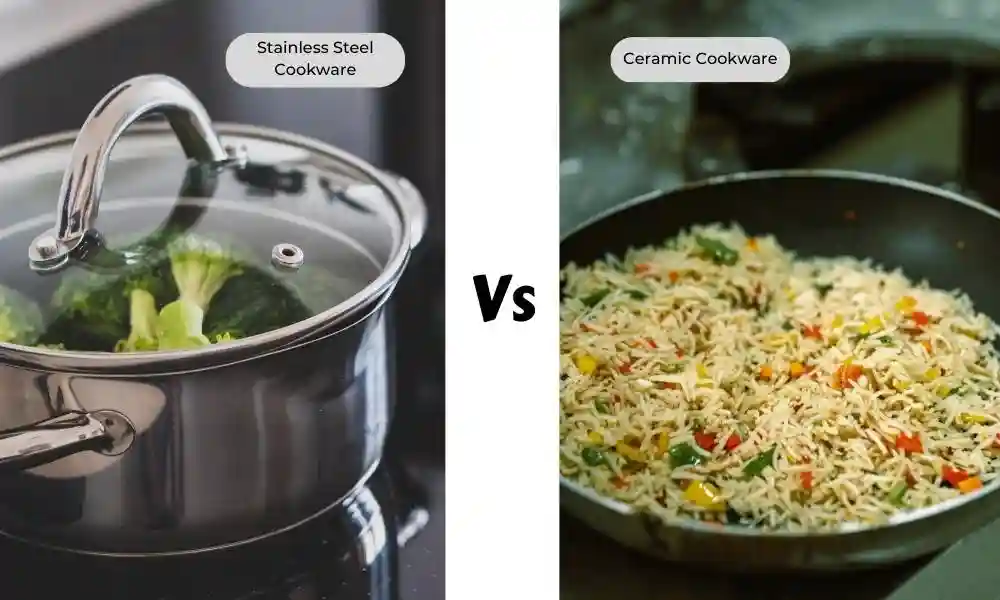
Stainless steel cookware is usually better for long-term durability, browning, and everyday cooking, while ceramic-coated cookware is better for easy food release and quick cleanup.
When you cook in an American kitchen, the right pan can make a busy weeknight much easier. You might need eggs before work, grilled cheese for the kids, or a good sear on chicken for dinner. Ceramic and stainless steel cookware can handle many of these jobs, but they behave quite differently on the stove.
Ceramic-coated pans have a slick surface that helps food release with less sticking. Stainless steel pans have a hard metal cooking surface that can last for years with proper care. The best choice depends on what you cook, how much maintenance you want, and whether you value convenience or long-term use more.
One detail matters before comparing them: ceramic-coated cookware is not the same as solid ceramic cookware. Most pans sold as ceramic nonstick have a metal body with a thin, ceramic-based coating. Stainless steel cookware is made from steel alloys and may have an aluminum or copper core to improve heat distribution. Understanding these differences makes the buying decision much easier.
Ceramic vs Stainless Steel Cookware: The Main Differences
Stainless steel is the stronger all-around choice for durability and high-heat cooking, while ceramic-coated cookware is easier for low-stick cooking. Neither wins every category. A pan that works well for delicate eggs may not be the best tool for searing a steak.
The biggest difference is the cooking surface. Ceramic-coated cookware has a smooth coating that helps food slide across the pan. Stainless steel has a metal surface that allows food to brown and form a flavorful layer on the bottom, which you can loosen with liquid to make a pan sauce.
Price alone does not tell you which pan is better. A low-cost stainless steel pan may perform well for years, while a premium ceramic-coated pan can still lose its nonstick properties as the surface wears. Construction, cooking habits, and care often matter more than the price tag.
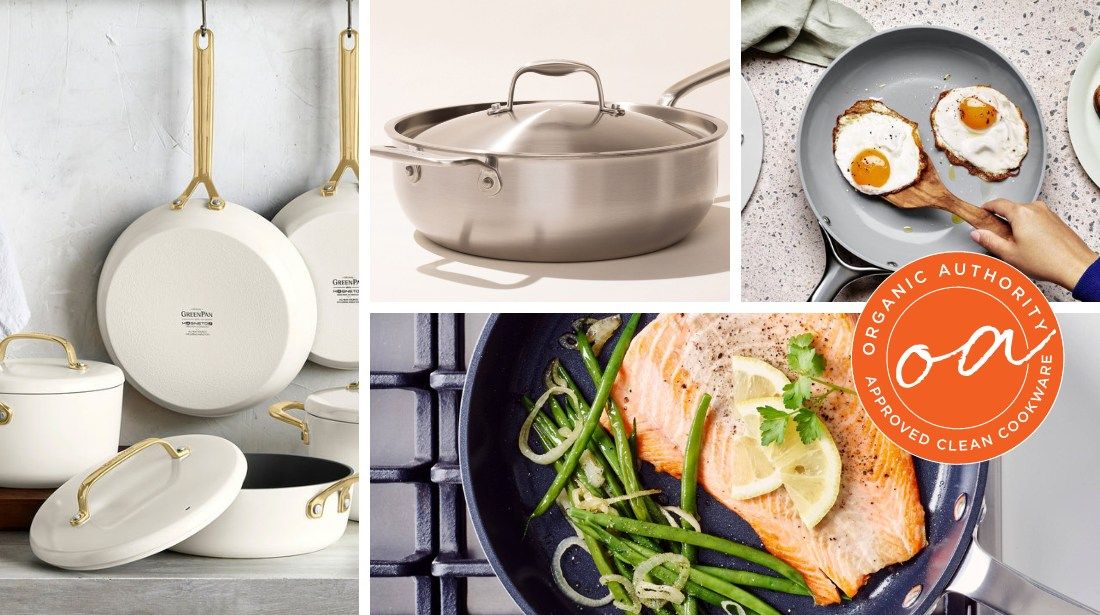
Source: organicauthority.com
Best for easy food release
Ceramic-coated cookware is usually easier for beginners who want to cook eggs, pancakes, and other delicate foods with less sticking.
Best for long-term use
Stainless steel is usually the better choice because its cooking surface does not rely on a thin nonstick coating that gradually wears away.
Best for browning
Stainless steel is well suited to browning meat, sautéing vegetables, and building flavorful pan sauces.
Best for quick cleanup
Ceramic-coated cookware often needs less scrubbing after everyday low-stick cooking, although both materials benefit from prompt cleaning.
What Is Ceramic-Coated Cookware?
Ceramic-coated cookware usually starts with an aluminum or other metal body. The manufacturer applies a thin coating made with ceramic-based materials, often using a silica-based sol-gel process, to create a smooth cooking surface. The result is a pan that looks and works much like other nonstick cookware.
The word ceramic can be confusing. Most ceramic nonstick frying pans are not made entirely from clay or ceramic. Their metal body provides structure and heat conduction, while the surface coating helps food release. Solid ceramic cookware is a separate category and has different heating and handling needs.
Ceramic coatings can be sold in many colors and finishes. Their appearance does not establish how long the coating will last or what exact ingredients it contains. Check the manufacturer’s product information if you want to know the coating type, oven limit, or care requirements.
Main benefit
The slick surface helps reduce sticking and makes many everyday meals easier to cook.
Main limitation
The nonstick effect can decline with wear, overheating, and rough handling.
What Is Stainless Steel Cookware?
Stainless steel cookware is made from iron-based alloys that contain chromium and may contain nickel and other elements. Chromium helps form a protective surface layer that resists rust and corrosion. The exact alloy varies by product.
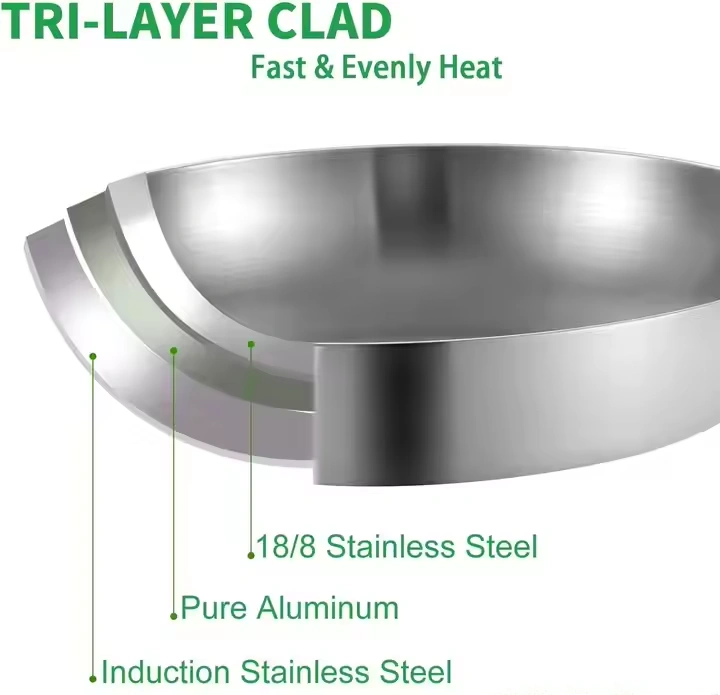
Many stainless steel pans use multiple layers of metal. A stainless steel exterior and cooking surface may surround an aluminum or copper core, which helps spread heat more evenly. This construction is often called clad cookware, and its performance depends on the thickness and design of the layers.
Unlike a coated nonstick pan, stainless steel does not need a slick surface layer to remain useful. The metal can develop discoloration, stuck-on residue, or scratches, but these do not automatically mean the pan has reached the end of its life.
Main benefit
A quality pan can handle frequent use and a broad range of cooking techniques for many years.
Main limitation
Food can stick when the pan is too cold, too hot, overcrowded, or used without suitable cooking fat.
Which Cookware Is Better for Everyday Cooking?
For most households, stainless steel is the better main cookware material because it handles many cooking tasks without depending on a coating. Ceramic-coated cookware is more convenient for meals where food release matters most. Your cooking routine should guide the choice.
Think about a typical week in a US home. You may cook scrambled eggs before work, brown ground beef for tacos, sauté onions for pasta, and roast chicken on the weekend. One material can perform several of these jobs better than the other, so the right mix matters more than picking a single winner.
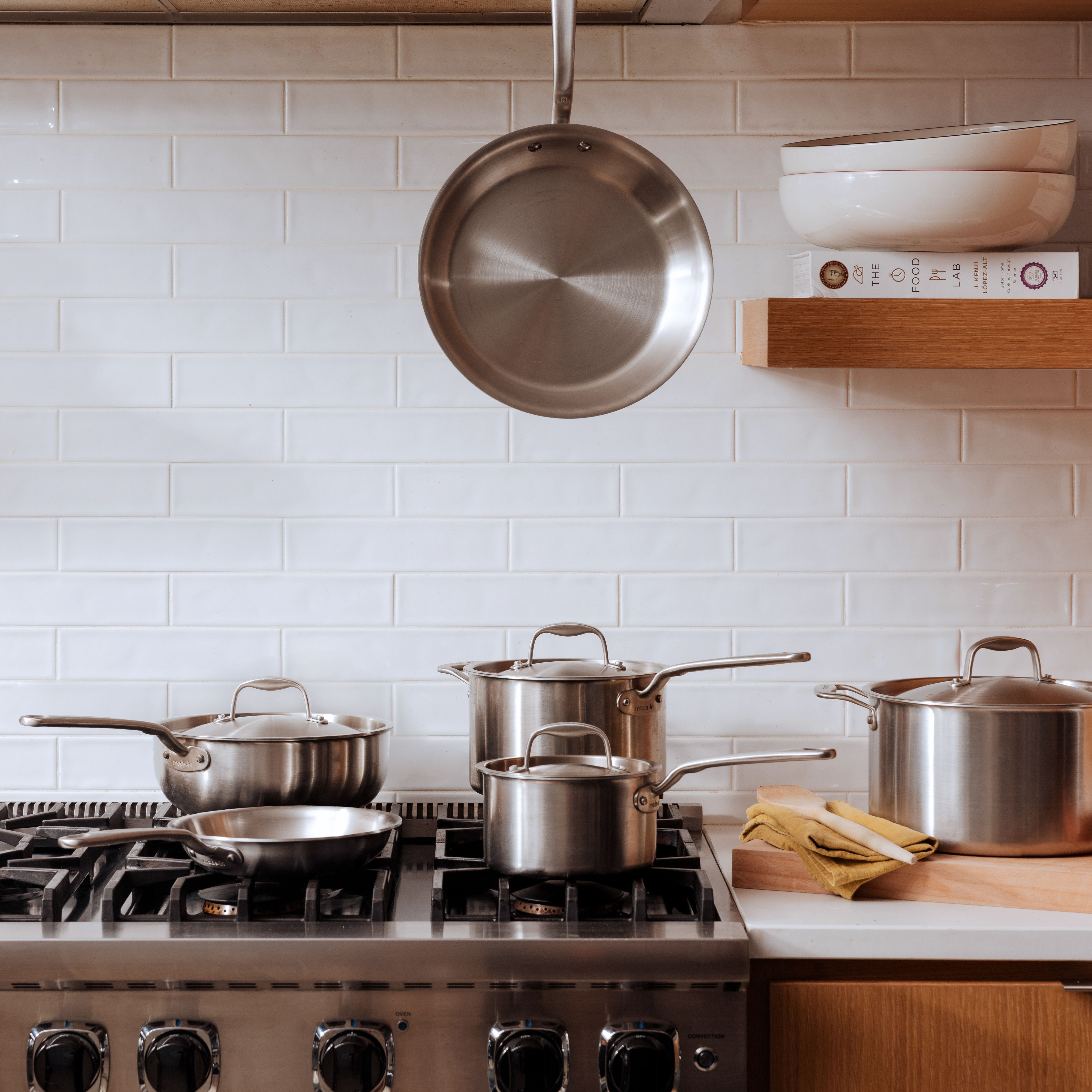
Source: cdn.sanity.io
Eggs and pancakes
Ceramic-coated cookware usually has the advantage because its surface helps delicate foods release with less effort. Use low to medium heat and follow the care instructions.
Steak and chicken
Stainless steel is often the better tool for a deep brown crust. It supports the development of browned bits that can become the base of a sauce.
Vegetables
Both can work well. Ceramic-coated cookware is convenient for light sautéing, while stainless steel is useful for browning vegetables and building flavor.
Rice and sticky foods
Results depend on the recipe, heat, water level, and pan design. Ceramic coatings can help with release, but a suitable pot and correct cooking method are still essential.
Sauces and reductions
Stainless steel often works better because browned food residue can dissolve into stock, wine, or water to add flavor to a sauce.
Best Choice for Beginners
Ceramic-coated cookware can be easier for a new cook to manage, especially when learning to prepare eggs, crepes, and pancakes. It offers a little more room for error when food release is the main concern. Still, a nonstick surface does not prevent burning when the heat is too high.
Stainless steel takes some practice, but the learning curve is manageable. Preheat the pan, add oil when appropriate, and let food develop a crust before trying to turn it. If food resists, it may need more time rather than more force.
Begin with gentle heat
Use low or medium heat for delicate foods, especially in ceramic-coated pans.
Avoid crowding
Too much food in one pan can lower the surface temperature and cause steaming instead of browning.
Best Choice for Experienced Home Cooks
Stainless steel offers more flexibility for cooks who often sear, deglaze, reduce sauces, and move between different cooking methods. It also lets you use metal utensils more freely than a coated nonstick pan, provided you avoid damaging the pan or using tools in ways that can scratch other surfaces.
A ceramic-coated skillet still earns its place when convenience matters. It can be useful for breakfast, delicate fish, or quick meals when you do not want to manage food sticking. Experienced cooks can benefit from keeping both materials available.
For technique-driven cooking
Use stainless steel when you want browning, fond, and sauce-making flexibility.
For fast weekday meals
Use ceramic-coated cookware when easy release and quick cleanup are your main goals.
Is Ceramic or Stainless Steel Cookware Safer?
Both ceramic-coated and stainless steel cookware can be suitable for normal home cooking when used as directed. Safety depends on the specific product, its condition, the cooking temperature, and how you use it. It is not accurate to claim that every ceramic pan is safer than every stainless steel pan.
Ceramic-coated cookware is often marketed as an alternative to traditional PTFE nonstick coatings. Many ceramic nonstick products are made without intentionally added PTFE, but the label alone does not verify every ingredient or manufacturing detail. If avoiding a specific substance is important to you, review the manufacturer’s written material for the exact product.
Stainless steel avoids a nonstick coating, but it is not entirely free of material-related considerations. Some alloys contain nickel, and small amounts of metals may transfer into food under certain cooking conditions. The amount can depend on the alloy, the age of the pan, cooking time, and the acidity of the food.
Source: prudentreviews.com
Ceramic Coatings and Heat
Ceramic-coated pans should be used within the manufacturer’s stated temperature limits. High heat can speed up the loss of nonstick performance, damage some coatings, and make cooking oils smoke. For most eggs and delicate foods, low to medium heat is a sensible starting point.
Avoid leaving an empty coated pan on a hot burner. Do not assume that a pan is safe at every oven temperature just because its body is metal. Handles, lids, coatings, and other parts may have different heat limits.
Use suitable heat
Follow the exact product instructions for stovetop and oven temperature limits.
Check the surface
If the coating is peeling, flaking, or badly damaged, stop using the pan and follow the manufacturer’s replacement guidance.
Stainless Steel and Metal Transfer
Stainless steel is widely used in food preparation because it resists corrosion, but some metal transfer can occur. Research has found that nickel and chromium release can increase in certain conditions, including prolonged cooking of acidic foods in new stainless steel cookware. That finding does not mean ordinary use makes every stainless steel pan unsafe.
People with a known nickel allergy or a specific medical concern may wish to discuss cookware choices with a qualified health professional. The exact alloy matters, so check the manufacturer’s material specifications rather than assuming all stainless steel products have the same composition.
For general use, clean cookware as directed, avoid products with uncertain materials, and replace pans that show structural damage that affects safe handling. Do not confuse normal discoloration or a removable stain with corrosion or a serious defect.
Review the alloy
Check the product specifications if nickel content is a concern.
Use the right cleaning method
Remove food residue without using harsh methods that are not approved for the pan.
Which Cookware Lasts Longer?
Stainless steel generally lasts longer because the cooking surface is part of the metal pan rather than a thin nonstick layer. With suitable care, a stainless steel skillet may remain useful for many years. Its lifespan depends on construction, frequency of use, storage, and whether the pan becomes warped or damaged.
Ceramic-coated cookware has a different wear pattern. It may work very well when new, but its easy-release properties can decline over time. The pan may still look usable even when food begins to stick more often, so appearance alone is not a reliable measure of coating performance.
A ceramic pan’s lifespan cannot be predicted from the word ceramic or its price alone. Coating formula, thickness, manufacturing quality, heat exposure, and cleaning habits all affect performance. Treat advertised durability claims as product-specific statements, not guarantees that apply to every pan.
Source: theskillfulcook.com
What Shortens the Life of Ceramic Cookware?
Excessive heat is one of the main habits to avoid. Repeated overheating can reduce the coating’s nonstick performance, while metal utensils, abrasive scrubbers, and stacking pans without protection can add wear. A pan may also lose its usefulness gradually as food begins to stick despite careful cooking.
Use a soft sponge, avoid sudden temperature changes when the manufacturer warns against them, and let the pan cool before washing. Store it with a pan protector or soft cloth between stacked pieces to reduce surface damage.
Avoid high heat
Use the lowest heat that lets the food cook properly, and do not preheat an empty ceramic-coated pan for long periods.
Protect the coating
Use suitable utensils and avoid abrasive cleaners unless the manufacturer expressly permits them.
Replace when needed
Follow the manufacturer’s advice if the coating peels or becomes damaged.
How to Extend the Life of Stainless Steel
Stainless steel can withstand regular use, but good care still matters. Avoid dragging a pan across a glass cooktop, use a suitable burner size, and clean away heavy residue before it becomes difficult to remove. Let the pan cool enough for safe handling before washing.
Rainbow-colored heat marks and light discoloration often affect appearance rather than function. Food residue can usually be removed with a suitable cleaner and a nonabrasive pad. If the base becomes badly warped, a handle loosens, or corrosion appears, assess the pan’s condition and follow the manufacturer’s guidance.
Choose quality construction
A well-built pan with a stable base and secure handle is more useful over the long term.
Clean promptly
Soak stuck-on food in warm water and use a cleaner approved for stainless steel.
Store with care
Avoid impacts and rough stacking that can damage handles or other cookware.
Which Material Is Easier to Clean?
Ceramic-coated cookware usually wins for easy cleanup when food releases well. Eggs, pancakes, and soft foods often leave less residue on a sound nonstick surface. Warm water, dish soap, and a soft sponge are generally enough for routine cleaning, subject to the product instructions.
Stainless steel may need more work after searing or frying. Food can bond to the surface when heat and moisture are not managed well, but soaking and gentle scrubbing usually loosen the residue. Stainless steel also allows you to deglaze the pan during cooking, which can turn browned bits into a useful part of a sauce.
Dishwasher safety varies by product. A stainless steel pan may be labeled dishwasher-safe, but a manufacturer may still recommend handwashing to preserve its finish. Ceramic-coated cookware can have similar restrictions, especially if its handle, exterior coating, or other parts are sensitive to harsh detergents.
Source: milkglasshome.com
How to Clean Ceramic-Coated Cookware
Allow the pan to cool, then wash it with warm water, mild dish soap, and a soft sponge. Do not pour cold water into a very hot pan if the manufacturer warns against thermal shock, because sudden temperature changes can damage some cookware.
If food sticks, soak the pan rather than scraping it with a knife or metal tool. Avoid steel wool and strong abrasive cleaners unless the product instructions explicitly permit them. Dry the pan before storage to keep the surrounding parts in good condition.
Use gentle tools
A soft sponge or cloth helps protect the cooking surface.
Skip harsh scraping
Loosen residue with warm water and time instead of cutting into the coating.
How to Clean Stainless Steel Cookware
For stuck food, add warm water and let the pan soak. You can also warm water in the pan briefly to loosen residue, provided the pan is safe to heat that way and you handle it carefully. Wash with dish soap and a nonabrasive sponge.
For stubborn discoloration, use a cleaner intended for stainless steel and follow its directions. Avoid leaving strong cleaners on the surface longer than recommended. Drying the pan after washing can reduce water spots, though these spots usually affect appearance rather than performance.
Loosen stuck food
Soak the pan or gently simmer water to release residue.
Treat stains correctly
Use a suitable stainless steel cleaner instead of assuming every stain requires aggressive scrubbing.
Heat Distribution and Cooking Performance
The cookware’s construction often matters as much as its surface material. Aluminum conducts heat well, while stainless steel is valued for durability and corrosion resistance. A stainless steel pan with an aluminum or copper core can spread heat more evenly than a thin pan made from a single layer of steel.
Many ceramic-coated pans use aluminum bodies because aluminum heats quickly and keeps the pan relatively light. However, not every ceramic pan has the same base thickness or heating pattern. A thin pan can develop hot spots, while a better-built pan may heat more evenly.
For a fair comparison, look at the complete pan rather than the coating label. Base thickness, layered construction, burner size, and heat setting all affect the result. The pan that suits a gas range may behave differently on an induction cooktop if its base is not designed for induction.
Source: homeyas.com
Cooking on Gas and Electric Stoves
Both stainless steel and ceramic-coated cookware can work on gas and electric stoves when the manufacturer lists the surface as compatible. Use a burner close to the pan’s base size to avoid wasting heat or exposing the sides and handle to excessive flame.
Electric coil and glass-top ranges may respond more slowly to temperature changes than gas burners. On these stoves, adjust the heat early and avoid moving cookware in ways that could scratch a glass surface. A flat, stable base helps maintain good contact.
Gas ranges
Keep the flame under the base rather than letting it climb the sides of the pan.
Electric ranges
Allow for slower temperature changes and use a pan with a stable, flat base.
Can You Use Ceramic or Stainless Steel on Induction?
Induction cooktops require cookware with a suitable magnetic base. Stainless steel cookware may work, but not every stainless steel alloy is magnetic enough for induction. Check the manufacturer’s compatibility label or use the magnet test as an initial check: a magnet that sticks firmly to the base suggests that the pan may be suitable.
Ceramic-coated cookware can also work on induction if its underlying base is designed for it. The ceramic coating itself does not make the pan induction-compatible. Check the exact model’s specifications before buying cookware for an induction range.
Check the base
Look for an induction-compatible label and verify the manufacturer’s guidance.
Do not rely on appearance
A shiny steel finish or ceramic surface does not establish induction compatibility.
Cost, Value, and Replacement Over Time
The best value depends on how often you cook and how long you expect the pan to last. Ceramic-coated cookware can offer a lower-cost way to get easy food release, but it may need replacement when the coating loses performance. Stainless steel can cost more upfront for quality construction, yet it often remains useful for much longer.
A simple cost-per-year calculation can help compare two pans. Divide the purchase price by the number of years you realistically expect to use the pan. For example, a hypothetical $40 ceramic pan used for two years costs $20 per year, while a hypothetical $90 stainless steel pan used for nine years costs $10 per year. These figures illustrate the method, not the actual lifespan of either type.
Do not treat those examples as a promise that stainless steel will always be cheaper. A poorly made steel pan may warp, while a well-cared-for ceramic pan may last longer than expected. Use realistic product-specific information, your cooking frequency, and the cost of replacement when comparing value.
Source: chancescook.com
What Should You Look for When Buying Ceramic Cookware?
Choose a pan with clear material information, a stable base, a comfortable handle, and instructions that fit your stove and cooking habits. Check the maximum oven temperature, whether the lid is oven-safe, and whether the product permits dishwasher use. A long warranty can be useful, but read what it actually covers.
Be cautious about broad claims such as scratch-proof, lasts forever, or completely non-toxic. No coating should be assumed immune to wear. Look for specific information about care, temperature limits, replacement guidance, and the substances you want to avoid.
Confirm the coating details
Read the manufacturer’s material and care information if you want to avoid particular chemicals.
Check the heat limits
Make sure the pan can handle the temperatures you use on the stove or in the oven.
Inspect the handle and base
Choose a stable pan that feels balanced and has secure attachments.
What Should You Look for When Buying Stainless Steel?
Check whether the pan has a layered base or fully clad construction. These designs can improve heat distribution, although quality still depends on the materials and thickness. A secure handle, stable base, and clear induction and oven ratings are useful signs of a well-specified product.
A high price does not guarantee the best cooking experience for your needs. A basic stainless steel skillet can handle many daily tasks, while a heavier clad pan may offer better heat control. Choose the construction that matches your cooking style instead of paying for features you will rarely use.
Review the construction
Compare the base and layers rather than judging the pan by its polished exterior.
Check compatibility
Verify that the pan suits your cooktop, oven needs, and storage space.
Consider weight
A heavy pan can feel stable but may be harder to lift, especially when full.
Common Mistakes When Choosing Between Ceramic and Stainless Steel
The most common mistake is choosing cookware based on one feature alone. Easy food release, durability, price, and heat performance are related, but no single feature decides which pan will work best in every kitchen. Match the material to the meals you prepare most often.
Another mistake is treating all ceramic cookware as solid ceramic or assuming all stainless steel pans have the same construction. Those labels cover different designs. Read the product details before buying, especially if you need induction compatibility, a certain oven temperature limit, or a specific coating composition.
Care habits also affect performance. A ceramic-coated pan can lose its easy-release quality if repeatedly overheated or scrubbed with abrasive tools. Stainless steel can frustrate a new cook if food is added before the pan is ready or if the cook tries to turn food before a crust forms.
Source: images.ctfassets.net
Mistake 1: Heating a Ceramic Pan Too Much
Ceramic-coated cookware does not need extreme heat to cook everyday meals. Excessive heat can shorten the useful life of the coating and cause cooking oil to smoke. Start with low or medium heat, then adjust as the recipe requires.
Better approach
Use gradual heating and avoid leaving an empty coated pan on a hot burner.
Mistake 2: Using Stainless Steel Without Preheating
Food may stick when it hits a stainless steel pan that is not properly heated, though the correct method varies by recipe and pan. A practical approach is to warm the pan over moderate heat, add cooking fat when appropriate, and then add the food. Do not heat the pan for so long that oil smokes heavily.
Better approach
Preheat gradually, use suitable cooking fat, and give food time to brown before turning it.
Mistake 3: Assuming Every Pan Is Oven-Safe
An oven-safe body does not mean every handle, lid, coating, or attachment can withstand the same temperature. Check the product’s stated oven limit before transferring a pan from the stovetop to the oven. If the instructions are unclear, do not assume that a high-temperature setting is safe.
Better approach
Use the manufacturer’s exact oven-temperature and lid guidance for the specific pan.
Which Is Better for Your Household?
The right choice depends on the meals you cook, the time you have for cleanup, and your budget. Stainless steel makes a strong everyday foundation for people who want cookware that can handle a wide range of methods. Ceramic-coated cookware makes sense when low-stick cooking is the priority.
If you are furnishing a first apartment, replacing worn pans, or setting up a family kitchen, you do not need to buy a complete matching set. Start with the pan that solves your most common cooking problem. Add another material only when it fills a clear gap.
Source: cdn.sanity.io
Choose Ceramic-Coated Cookware If…
Ceramic-coated cookware is a practical choice for cooks who value quick release and easy cleanup. It can be especially useful for breakfast foods and meals that tend to stick. It also suits people who prefer a lightweight pan, provided the specific product has a comfortable design.
You cook eggs often
A sound ceramic-coated surface can make eggs and omelets easier to release.
You want simple cleanup
Less stuck food can mean less time spent washing the pan.
You are willing to replace it
You accept that the coating may eventually lose performance and need replacement.
Choose Stainless Steel Cookware If…
Stainless steel suits people who cook a wide variety of foods and want a durable pan for repeated use. It is particularly useful for searing, sautéing, and making sauces. It can take more practice to prevent sticking, but the cooking surface does not rely on a nonstick coating.
You sear meat regularly
Stainless steel supports browning and helps develop flavorful pan residue.
You want long-term value
A well-built pan can remain useful for years with proper care.
You want cooking flexibility
Stainless steel can handle a broad range of recipes and techniques when the pan’s temperature limits and construction permit them.
Is a Combination of Both Worth It?
For many home cooks, owning both materials is more practical than choosing only one. A stainless steel skillet can handle meat, vegetables, and pan sauces, while a ceramic-coated skillet can make eggs and other delicate foods easier. You can keep the number of pans small and still cover most daily cooking tasks.
If your budget is tight, start with one well-made stainless steel pan if durability and versatility matter most, or one ceramic-coated skillet if low-stick cooking is your main need. Add a second pan when you find a recurring task that your first one does not handle comfortably.
A simple starter setup
Choose one medium stainless steel skillet and one smaller ceramic-coated skillet if your budget and storage space allow.
Avoid buying duplicate pans
Pick sizes that match your household and the meals you cook rather than buying a large set with pieces you rarely use.
A Practical Decision Table for Ceramic vs Stainless Steel
Use this table to narrow your choice based on the cooking jobs that matter most. These are general tendencies, not guarantees for every product, because pan construction and care can change the results.
Source: organicauthority.com
Eggs and omelets
Ceramic-coated cookware is usually easier for food release, especially when the coating is in good condition.
Steaks and browned chicken
Stainless steel is generally the stronger option for browning and developing a flavorful pan base.
Low-maintenance cleanup
Ceramic-coated cookware usually needs less scrubbing after foods that release easily.
Frequent high-heat cooking
Stainless steel is generally better suited to high-heat searing, subject to the pan’s design and instructions.
Long service life
Stainless steel usually has the advantage because its cooking surface does not wear like a nonstick coating.
Avoiding a PTFE-based coating
A ceramic-coated product may meet this preference if the manufacturer confirms the exact composition; the ceramic label alone is not full verification.
Induction cooking
Either type can work if its base is induction-compatible.
Budget-friendly convenience
Ceramic-coated cookware may offer useful low-stick performance at an accessible initial price, but include future replacement in your value calculation.
The Quickest Way to Decide
Ask yourself one question: which problem do you want your next pan to solve? If you are tired of eggs sticking, ceramic-coated cookware may give you the biggest immediate benefit. If you want a pan for years of searing, sautéing, and sauce-making, stainless steel is usually the more versatile investment.
Before checking out, confirm the pan’s size, weight, cooktop compatibility, oven rating, and cleaning instructions. These practical details can matter more to daily satisfaction than the name of the material.
For convenience
Choose ceramic-coated cookware for easy release and simpler cleanup.
For versatility
Choose stainless steel for browning, durability, and broad cooking use.
For a balanced kitchen
Use both materials for the jobs each one handles best.
Frequently Asked Questions
Q
Is ceramic cookware better than stainless steel for health?
Neither material is automatically healthier in every situation. Ceramic-coated cookware may suit people who want to avoid a PTFE-based nonstick coating, but the exact product composition should be verified with the manufacturer. Stainless steel has a durable metal surface, although some nickel and chromium can transfer into food under certain cooking conditions.
For routine use, follow the manufacturer’s temperature and care instructions. If you have a known metal allergy or a specific health concern, discuss suitable cookware options with a qualified health professional.
Q
Does ceramic cookware last as long as stainless steel?
Usually, no. Stainless steel generally lasts longer because it does not depend on a thin nonstick coating for its cooking performance. Ceramic-coated cookware can lose its easy-release properties over time, particularly when overheated or cleaned with abrasive tools.
The actual lifespan depends on construction, use, and care. Replace ceramic-coated cookware according to the manufacturer’s advice when the surface becomes damaged.
Q
Can ceramic-coated cookware go in the oven?
Some ceramic-coated pans are oven-safe, but the maximum temperature varies by model. The handle, lid, and other parts may have lower heat limits than the pan body.
Check the manufacturer’s instructions for the exact pan before using it in the oven. Never assume that all cookware with a ceramic coating can tolerate the same temperature.
Q
Why does food stick to stainless steel cookware?
Food often sticks when the pan is not heated appropriately, the surface temperature is poorly managed, or the food is moved before it has developed a crust. Crowding the pan can also interfere with browning.
Preheat gradually, add a suitable amount of cooking fat when appropriate, and allow food to cook before trying to turn it. Adjust the method to the recipe rather than using maximum heat for every meal.
Q
Can I use metal utensils with ceramic-coated cookware?
It is generally better to use wood, silicone, or other utensils approved by the manufacturer. Metal utensils can scratch or damage many ceramic nonstick coatings, even when a product is marketed as scratch-resistant.
Check the care instructions for your exact pan. Using gentler utensils can help preserve the surface and extend its useful life.
Q
Which cookware is better for induction cooktops?
Neither material is automatically compatible with induction. The pan needs a suitable magnetic base, and some stainless steel alloys are not sufficiently magnetic for induction cooking.
Look for the manufacturer’s induction symbol or compatibility statement. A magnet that sticks firmly to the base can be a useful preliminary check, but the manufacturer’s specifications remain the better guide.
Q
Is ceramic cookware actually made of ceramic?
Most ceramic nonstick cookware is made from a metal body, often aluminum, with a thin ceramic-based coating. The coating creates the easy-release surface, while the metal body provides strength and helps conduct heat.
Solid ceramic cookware is a different category. Always check the product description if you want to know whether the entire vessel is ceramic or only its cooking surface has a ceramic-based coating.
✦ Wrapping Up
Conclusion
So, what’s better ceramic or stainless steel cookware? Stainless steel is usually the better long-term choice for durability, browning, and everyday versatility. Ceramic-coated cookware is often the better choice for delicate foods, easy release, and quick cleanup. Each material has a clear role, and neither is the best option for every cooking task.
For a busy household, the smartest setup may be a combination of both. Use stainless steel for searing meat, sautéing vegetables, and making sauces. Keep a ceramic-coated skillet for eggs, pancakes, and other foods that are easier to handle on a nonstick surface.
Before buying, check the material details, cooktop compatibility, temperature limits, care instructions, and expected replacement needs. A pan that fits your cooking habits and that you can maintain properly is more useful than one chosen for a label alone.
💡 Key Takeaway
Choose stainless steel if durability and cooking flexibility come first. Choose ceramic-coated cookware if easy food release and cleanup matter most. If you cook a wide range of meals, start with one of each and use them for the jobs they handle best.