

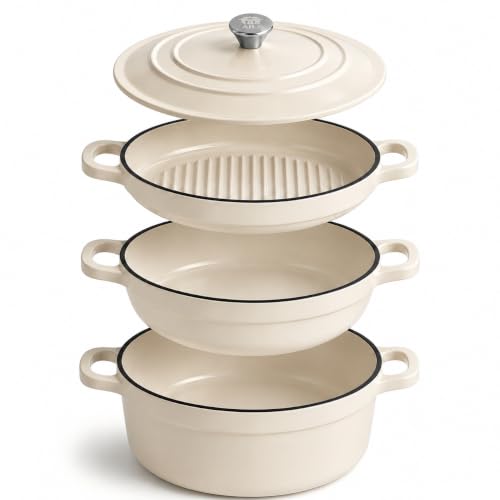
Is Ceramic Cookware Good?
Yes, for many home cooks. Ceramic cookware is a strong fit if you want simple daily cooking and easy cleanup. In my kitchen, ceramic pans felt quick and friendly. I liked them most for eggs, pancakes, vegetables, fish, and other foods that do not need a very hard sear. The smooth cooking surface also made cleanup feel less like a chore.
There is one key detail in the ceramic vs enamel cookware debate. Many products sold as ceramic cookware are actually metal pans with a ceramic-based nonstick coating. That is different from solid ceramic cookware. Ceramic-coated pans can lose their nonstick performance over time, especially with high heat, metal tools, or rough cleaning. For that reason, I treat ceramic cookware with care and keep the heat moderate.
What Makes It Stand Out / Key Features
- Smooth cooking surfaceA ceramic-based nonstick surface can make foods easier to release and pans easier to wipe clean.
- Easy daily cookingCeramic-coated pans work well for eggs, vegetables, fish, pancakes, and many other everyday foods.
- Lower heat needsModerate heat is often enough for ceramic-coated cookware, which can help protect the coating.
- Light handlingMany ceramic-coated pans use aluminum or another light metal body, so they are easy to move around the stove.
- Simple cleanupFood often releases with little effort when the coating is in good condition.
- Good food visibilityMany ceramic surfaces have a light interior, which can make browning and sauces easier to see.
My Recommendation
Consider ceramic cookware if you want light pans, easy cleanup, and simple everyday meals. Check the maker’s heat, oven, and utensil limits before buying.
| Best For | Why |
|---|---|
| Weeknight cooks | It makes quick meals and cleanup simple. |
| Egg and pancake lovers | The smooth surface can help delicate foods release. |
| Light cookware fans | Many ceramic-coated pans are easy to lift and move. |
Is Enamel Cookware Good?
Yes, especially if you want durable cookware for soups, stews, braises, and slow cooking. In my ceramic vs enamel cookware comparison, enamel felt more like a kitchen workhorse. Enamel itself is a glass-like coating that is fused to a metal base. The base can be cast iron, steel, or another metal. That means enamel cookware can vary a lot from one product to another.
I especially notice the difference with enameled cast iron. It holds heat well and stays steady when I add cold food to a hot pot. It is great for chili, tomato sauce, bread, and long braises. The tradeoff is weight. Moving a large enameled cast iron Dutch oven from the oven to the counter can feel like carrying a small kettlebell.
What Makes It Stand Out / Key Features
- Glass-like enamel surfaceEnamel forms a hard glass-like layer over the cookware base.
- Strong heat retentionEnameled cast iron is especially good at holding steady heat.
- Good for slow cookingDutch ovens and braisers work well for soups, stews, beans, and long braises.
- Acid-friendly surfaceQuality enamel is useful for acidic foods such as tomatoes when used as directed.
- Oven versatilityMany enamel pots can move from stovetop to oven, but the maker’s temperature limit should always be checked.
- Long service lifeA well-made enamel pot can last for many years when the coating is protected from severe impacts.
My Recommendation
Consider enamel cookware if you cook soups, stews, sauces, braises, or baked meals. It also suits cooks who want a durable pot that can serve for years.
| Best For | Why |
|---|---|
| Soup and stew cooks | Heavy enamel cookware can hold steady heat for long cooking. |
| Bakers | Enameled Dutch ovens can work well for oven baking. |
| Long-term cookware users | Quality enamel cookware can provide years of service with careful use. |
ceramic vs enamel cookware: Side-by-Side Test
The ceramic vs enamel cookware choice becomes easier when you look at real kitchen tasks. I would not pick one material for every meal. Each has a clear role.
Ceramic-coated cookware shines when I want speed and easy cleanup. Enamel cookware shines when I want steady heat and long cooking. The right choice depends on what ends up in your pot most often.
Daily Cooking: Which Feels Easier?
For quick meals, I value low effort. Ceramic-coated cookware usually feels easier to handle.
| Feature | Ceramic Cookware | Enamel Cookware |
|---|---|---|
| Quick meals | Very convenient | Good |
| Handling | Often light | Can be heavy |
| Food release | Very good when new | Good, but not usually nonstick |
| Cleanup | Usually easy | Usually easy |
⭐ Ceramic Cookware – 9/10 | Enamel Cookware – 8/10
Ceramic has the edge for fast, everyday cooking.
Heat Control: Which Handles More?
Heat changes matter when searing, baking, or simmering. The cookware base matters as much as the surface.
| Feature | Ceramic Cookware | Enamel Cookware |
|---|---|---|
| Moderate heat | Excellent | Excellent |
| Heat retention | Often moderate | Excellent with cast iron |
| High heat use | Depends on coating | Depends on base and maker limits |
| Long simmer | Good | Excellent |
⭐ Ceramic Cookware – 7/10 | Enamel Cookware – 9/10
Enamel has the edge for steady heat and long cooking.
Nonstick Cooking: Which Wins?
This is one of the biggest differences in ceramic vs enamel cookware.
| Feature | Ceramic Cookware | Enamel Cookware |
|---|---|---|
| Eggs | Very good when coating is fresh | Good with proper fat and heat |
| Pancakes | Very good | Good |
| Delicate fish | Very good | Good |
| Long-term nonstick | Coating can wear | Not a true nonstick surface |
⭐ Ceramic Cookware – 9/10 | Enamel Cookware – 7/10
Ceramic has the edge when easy food release is the main goal.
Durability: Which Lasts Longer?
A pan can be tough and still need care. Both types have different weak points.
| Feature | Ceramic Cookware | Enamel Cookware |
|---|---|---|
| Surface wear | Coating may lose performance | Enamel can last for years |
| Scratch risk | Avoid sharp metal tools | Protect enamel from hard impacts |
| Impact damage | Depends on pan body | Chips can occur |
| Long-term use | Good with careful use | Very good with careful use |
⭐ Ceramic Cookware – 7/10 | Enamel Cookware – 9/10
Enamel has the edge for long-term durability, especially on a strong cast iron base.
Cleaning: Which Saves Time?
After a long workday, I want dinner done and the sink clear. Both can make cleanup simple.
| Feature | Ceramic Cookware | Enamel Cookware |
|---|---|---|
| Light food residue | Very easy | Easy |
| Sticky food | Often easy when coating is healthy | May need soaking |
| Dishwasher use | Depends on product | Depends on product |
| Gentle cleaning | Recommended | Recommended |
⭐ Ceramic Cookware – 9/10 | Enamel Cookware – 8/10
Ceramic has the edge for quick cleanup.
Oven Use: Which Is More Flexible?
Oven cooking adds another layer to the ceramic vs enamel cookware question.
| Feature | Ceramic Cookware | Enamel Cookware |
|---|---|---|
| Oven use | Product-specific | Often excellent |
| Baking | Good for suitable pieces | Excellent for Dutch ovens |
| Broiler use | Check maker instructions | Check maker instructions |
| Temperature range | Varies by coating and handles | Varies by enamel and base |
⭐ Ceramic Cookware – 7/10 | Enamel Cookware – 9/10
Enamel often has the edge for oven-based cooking, but always check the product limit.
Weight: Which Is Easier to Move?
Weight matters more than it sounds when a pot is full of chili or soup.
| Feature | Ceramic Cookware | Enamel Cookware |
|---|---|---|
| Empty pan weight | Often light | Often heavy with cast iron |
| Moving a full pan | Usually easy | Can require two hands |
| Small kitchens | Easy to store | Needs stronger storage |
⭐ Ceramic Cookware – 9/10 | Enamel Cookware – 6/10
Ceramic has the edge when low weight matters.
Final Verdict: Which Should You Buy?
The ceramic vs enamel cookware choice comes down to your cooking style. Ceramic-coated cookware is a practical fit for quick meals, delicate foods, easy release, and simple cleanup. Enamel cookware is a strong fit for soups, stews, braises, baking, and steady heat. If you want light cookware for daily stovetop work, ceramic may suit you. If you want a durable workhorse for slow cooking, enamel may fit better.
I would not treat this as a battle with one universal winner. Think of ceramic as a nimble everyday tool and enamel as a sturdy kitchen workhorse. Your menu should guide the choice.